


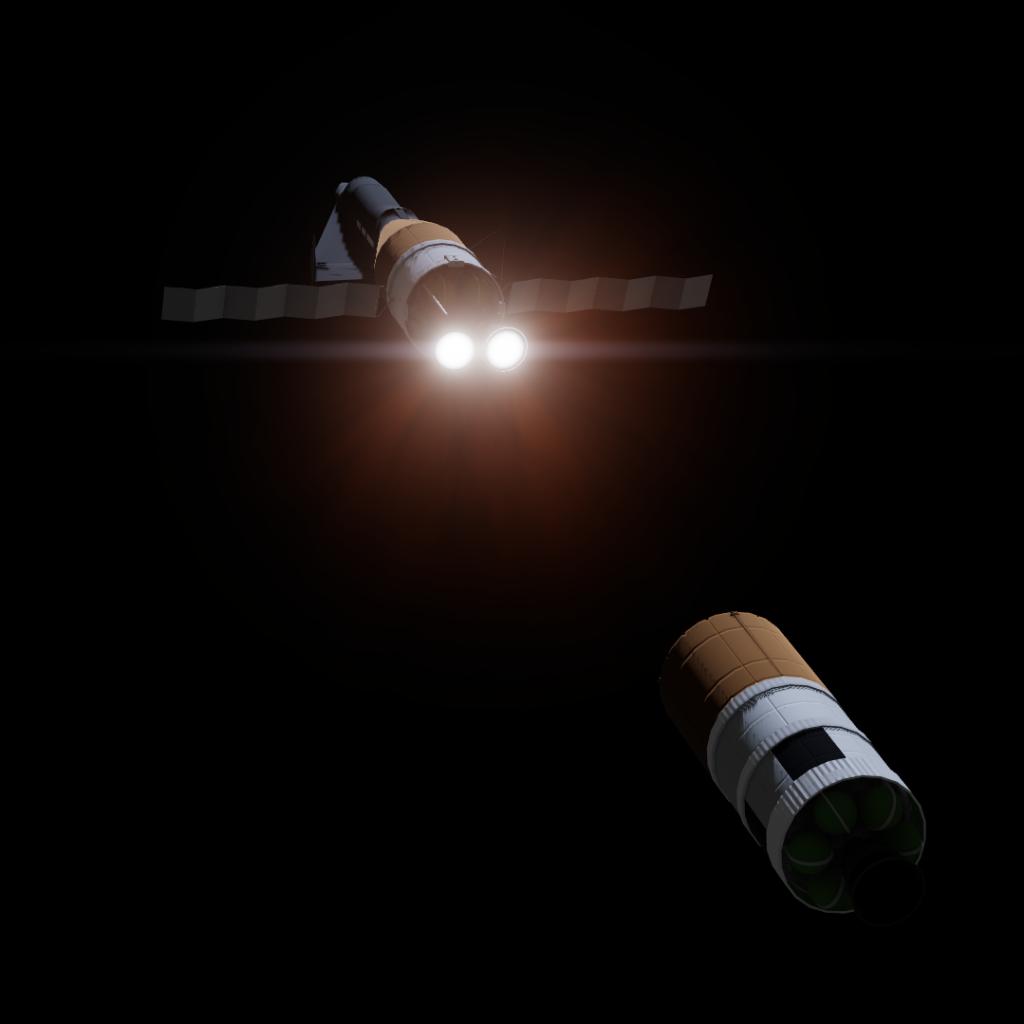
Hello Juno Players, I had some free time in between USAF prep to bring you this historical highlight!
This craft is (mostly) to scale and historically accurate; see below for discrepancies. Also, below is a detailed control guide since this thing is a beast to figure out.
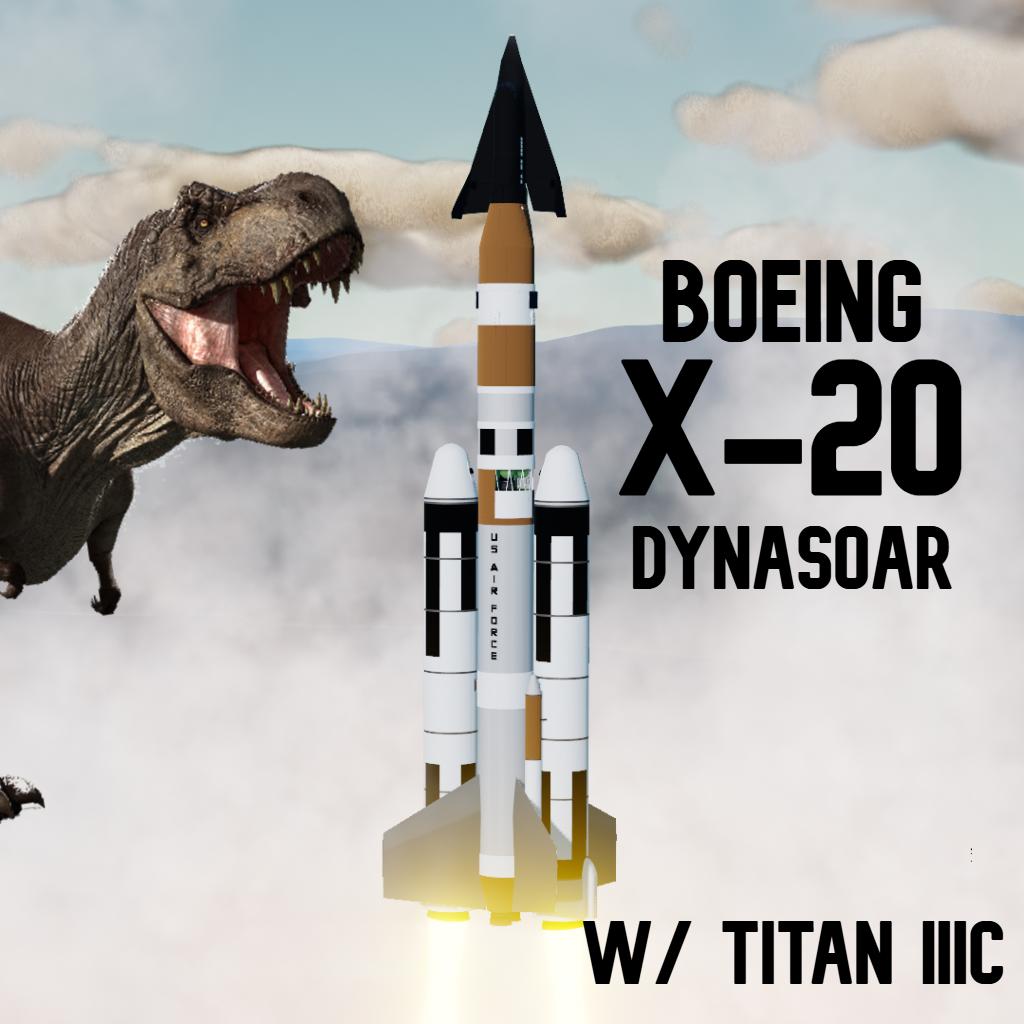
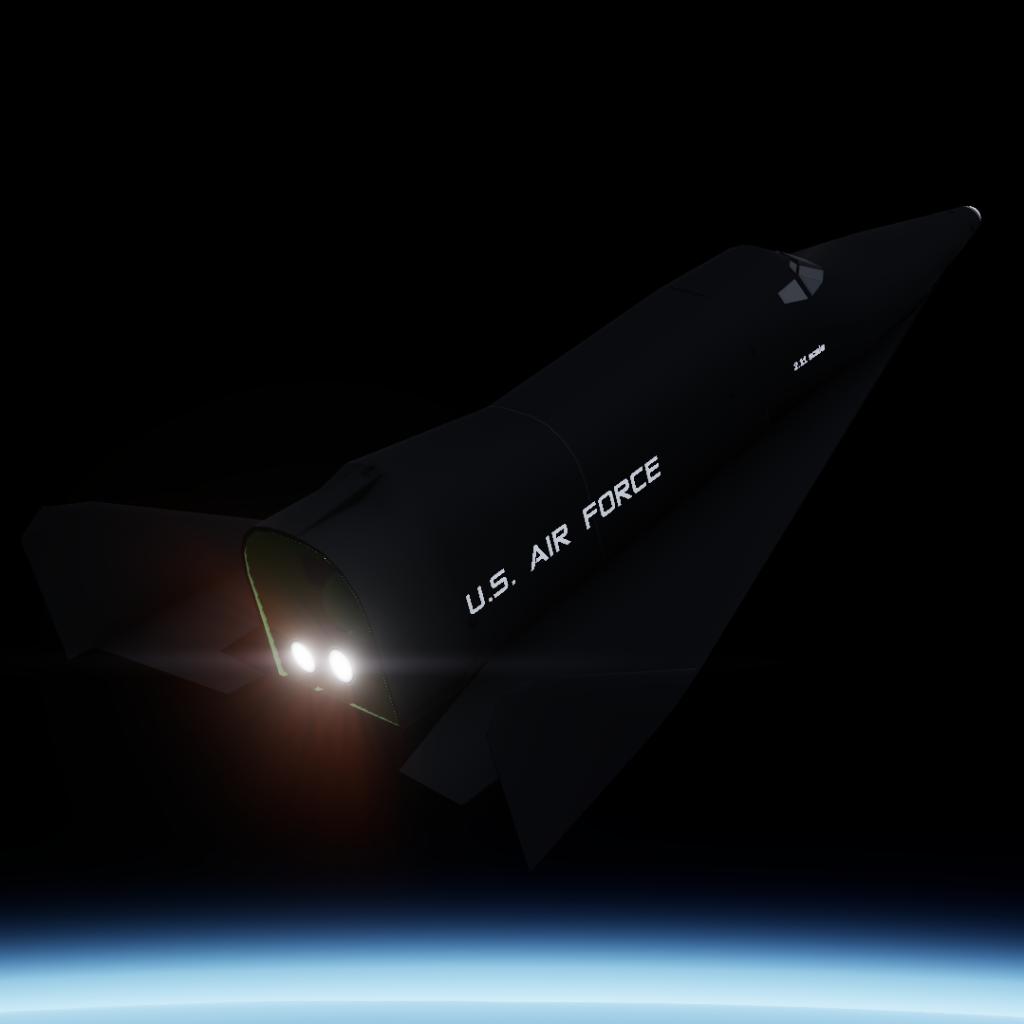
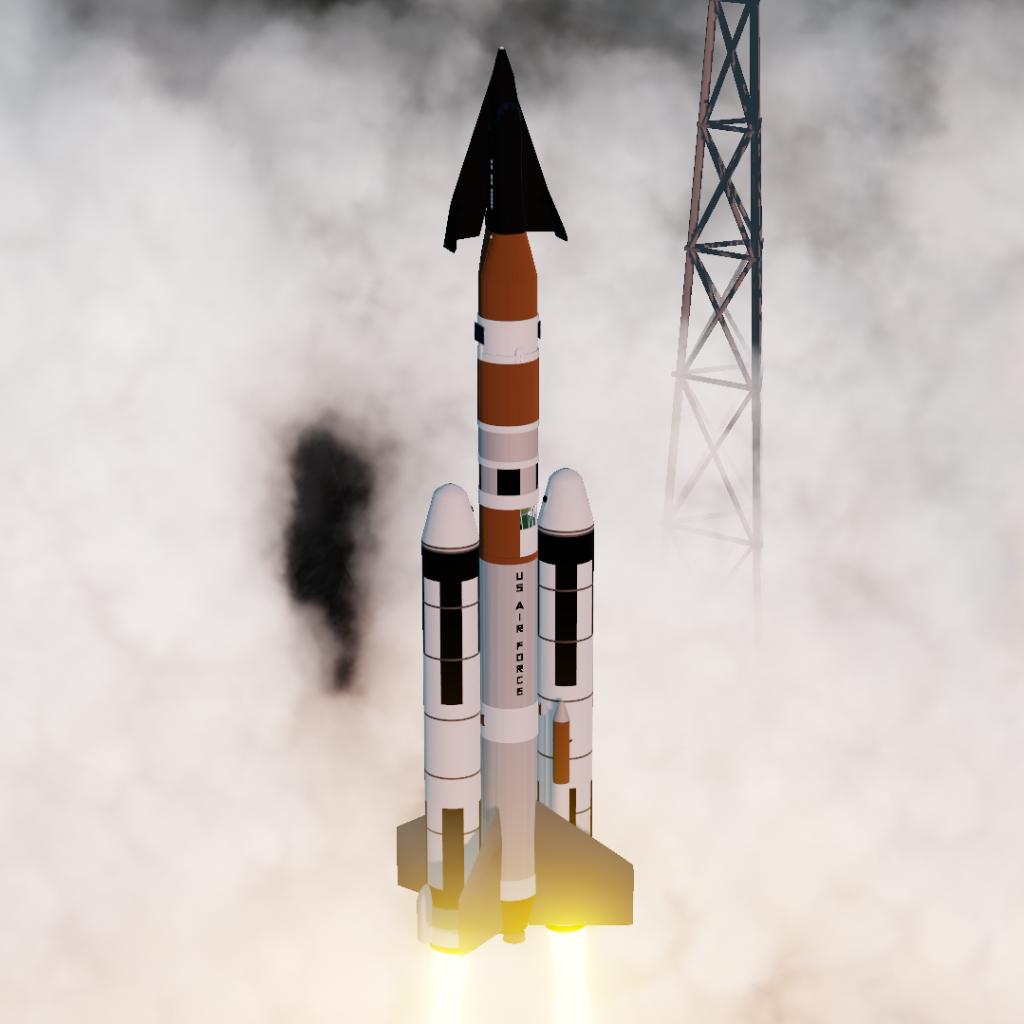
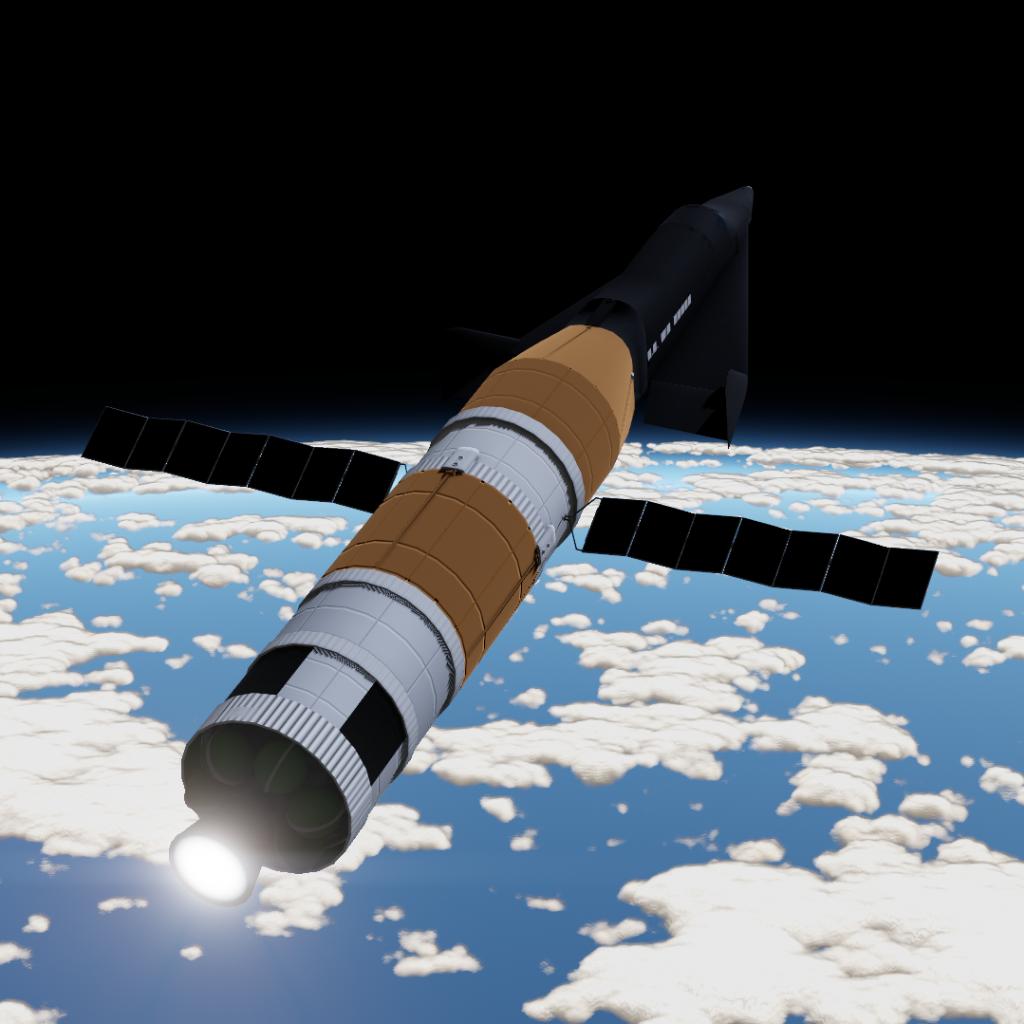
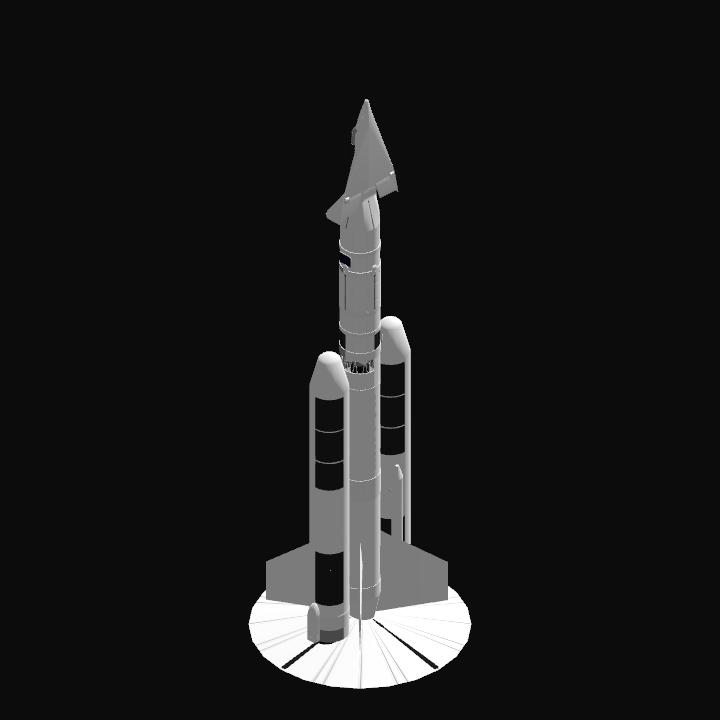
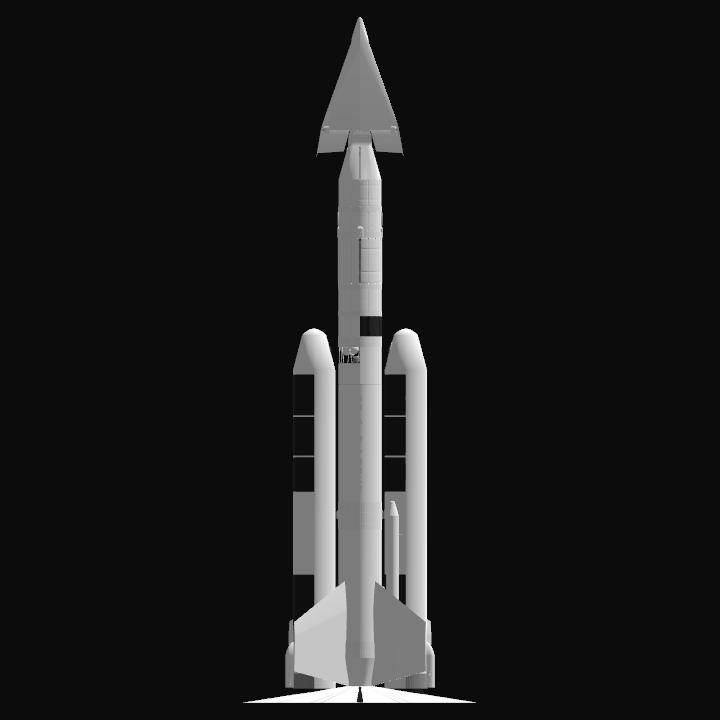
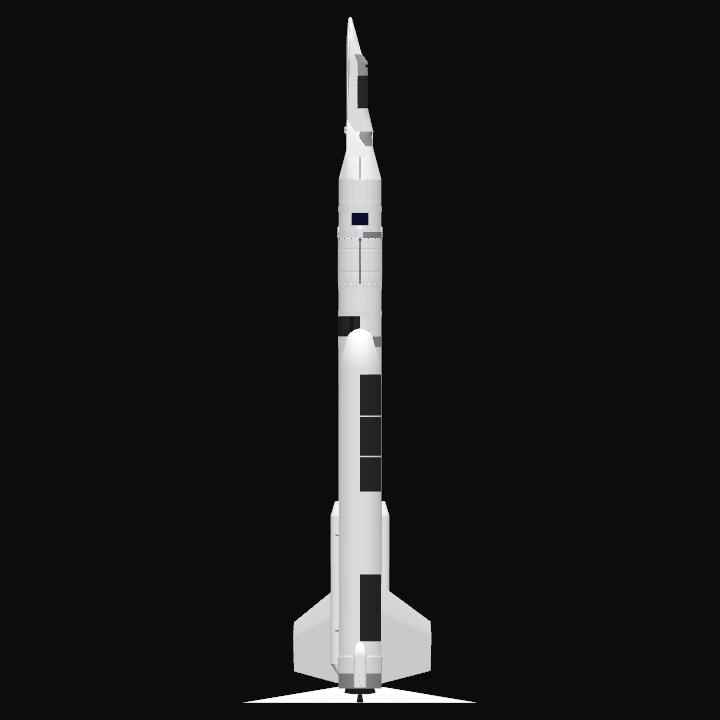
As a disclaimer, I took a few creative liberties to make this craft more usable in-game. Since the Dynasoar never went into full operation, I give myself a pass. Notable instances include: OMS thrusters on the Dynasoar, apart from the Transtage module to help you with fine orbit tuning and emergency DeltaV should you ever find yourself without said Transtage, an Aerobrake on Dynasoar, a slight redesign of Transtage from real life, and massive fins on the Titan IIIC core stage (fins were only to be included on Titan I and Titan II suborbital test versions of Dynasoar, since Titan IIIC had massive gimballing SRBs to control Dynasoar's crazy instability issues, which Juno seems to frown upon. Pictured below is that distinction.

The Boeing X-20 Dyna-Soar (Dynamic Soarer) was a United States Air Force (USAF) program aimed at developing a spaceplane capable of performing various military missions, including aerial reconnaissance, bombing, space rescue, satellite maintenance, and serving as a space interceptor to sabotage enemy satellites. The program ran from October 24, 1957, to December 10, 1963, cost $660 million ($6.78 billion in current dollars), and was cancelled just after spacecraft construction had begun. The original concept for the X-20 came from Eugen Sänger and Irene Brendt in Germany in 1941 as a rocket-powered bomber able to strike New York.
Other crewed programs during this time, namely Mercury and Vostok prefered ballistic entry from orbit to Earth under conventional reentry and parachute landings, while Dynasoar was designed to be a spaceborne glider, able to land at airbases. These characteristics made Dynasoar a far more advanced concept than other human spaceflight missions of the period. Research into a spaceplane was realized much later in other reusable spacecraft, such as the 1981–2011 Space Shuttle and the more recent Boeing X-40 and X-37B spacecraft.
Because of its aircraft-like design, the Dynasoar could perform inclination change maneuvers in Low Earth Orbit by skimming the upper atmosphere with its body alone. Inclination changing maneuvers are ordinarily extremely expensive to perform, meaning the Dynasoar could chase after an enemy satellite performing evasive maneuvers much cheaper than the enemy satellite in question.

IN-GAME CONTROLS
Note I: I have purposely made this Dynasoar capable of rendezvous and docking with a 150% sized docking port; however, because of its design, it is fairly hard to get the hang of for a beginner. If you are new to docking, I recommend learning on another craft before trying to perform one with this craft.
Note II: Reentry in this craft needs to be taken very carefully. It is absolutely capable of coming all the way back from orbit to landing, but performing that without breaking anything requires skill, practice, and smart use of the aerobrake and flaps (Slider 1).
Finally, how to fly this beast:
Launch is very unstable inherently due to the Dynasoar's design. You will spend the first section of the flight under SRB power only (Stage 0). Lock heading and launch. Have the Navball out and spam W&S (thumbsticks on mobile) to keep your heading between 85-70 degrees on ascent. You might find yourself rolling out of your intended heading, just try to keep it mostly stable, you should have enough DeltaV for minor corrections in orbit. Don't perform a massive gravity turn with this thing during SRB power; just keep it headed mostly up so that when your core stage lights, it can be as efficient as possible, and the atmosphere doesn't make Dynasoar throw you off your balance.
Once your boosters hit about 5% fuel, light your core stage (Stage 1) and begin your gravity turn after the boosters run out of fuel and detach. If you play Juno, I'm assuming you know how to be fairly efficient with this. Keep in mind the next few stages are relatively low-powered, so keep your apoapsis a good bit ahead of you.
After staging the core, the second stage will carry you almost to orbit, and then you will complete the final orbital insertion with the Transtage (3rd Stage). After getting into orbit, you should have a good amount of fuel to perform orbital adjustments and get anywhere you need to go in Droo Orbit.
When coming in for reentry and targeting a base, I can't really instruct you on how to get accurate entries, only that it takes a good bit of practice and love for the Dynasoar. I recommend dumping around 50% of the fuel on the Dynasoar into your spent transage to keep the COM on Dyna as forward as possible, but I've found reentry works alright if you don't do this.
While on reentry, use the brake slider to deploy your airbrake to whatever value suits your descent. Doing this will cause the Dynasoar to pitch upward, in which case use slider 1 for fine-tuning pitch, and the pitch slider for more aggressive pitching and general flying. Have your heading locked for most of descent, and disable your RCS when you think you're about halfway done, but once you get a ways through the atmosphere and locked heading starts wobbling Dyna too much, you should unlock your heading and glide down using sliders and keyboard (or thumbsticks) since Dynasoar is fairly naturally stable. It is very easy to rip your wings, so focus on bleeding speed before you get into the lower atmosphere as much as possible. With a bit of patience, practice, and luck, you can land this thing accurately anywhere and survive the trip!
Special thanks to my good friend Panda for designing the windows on Dynasoar! This dude's the best. If you haven't, check out some of the awesome things he does.
Good luck flying! As always, let me know if there are any questions, comments, or concerns. Go Air Force!
GENERAL INFO
- Predecessor: RCS fix 2
- Created On: Windows
- Game Version: 1.3.205.0
- Price: $31,758k
- Number of Parts: 348
- Dimensions: 49 m x 17 m x 17 m
PERFORMANCE
- Total Delta V: 5.6km/s
- Total Thrust: 8.1MN
- Engines: 13
- Wet Mass: 4.17E+5kg
- Dry Mass: 61,981kg
STAGES
| Stage | Engines | Delta V | Thrust | Burn | Mass |
|---|---|---|---|---|---|
| 1 | 2 | 1.7km/s | 5.6MN | 85s | 4.09E+5kg |
| 2 | 2 | 562m/s | 1.1MN | 3.2m | 4.09E+5kg |
| 3 | 0 | 0m/s | 0N | 0s | 1.54E+5kg |
| 4 | 1 | 1.0km/s | 596kN | 78s | 54,268kg |
| 5 | 2 | 1.8km/s | 423kN | 1.6m | 30,652kg |
| 7 | 2 | 448m/s | 24kN | 2.5m | 8,489kg |

heh
SPACE P L E N