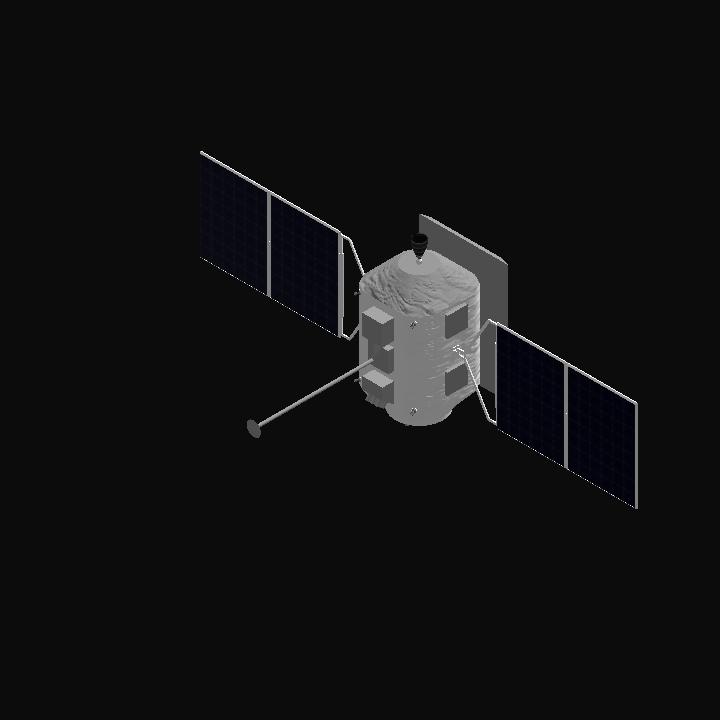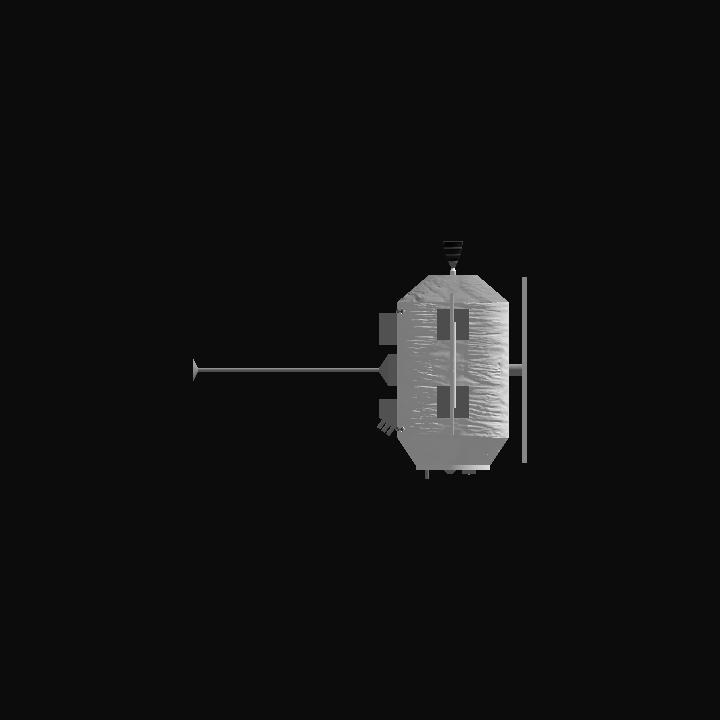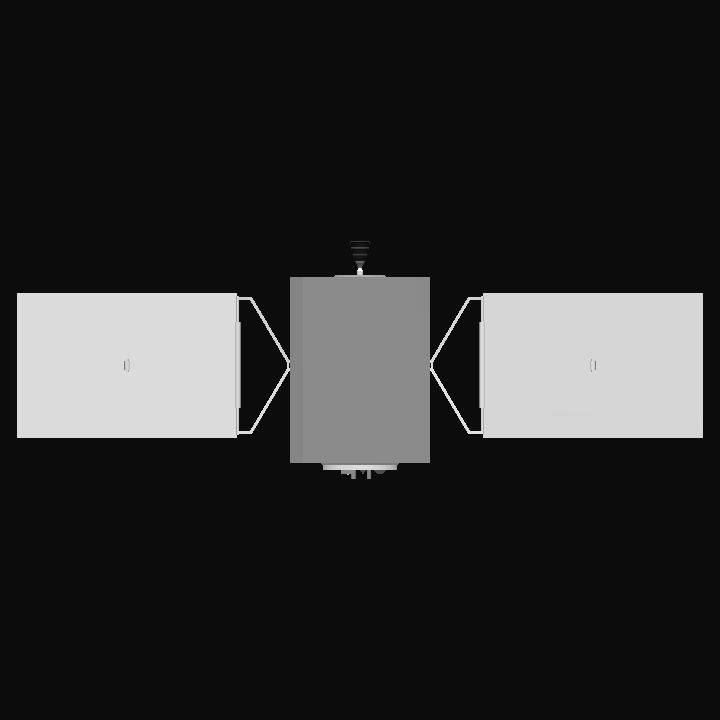

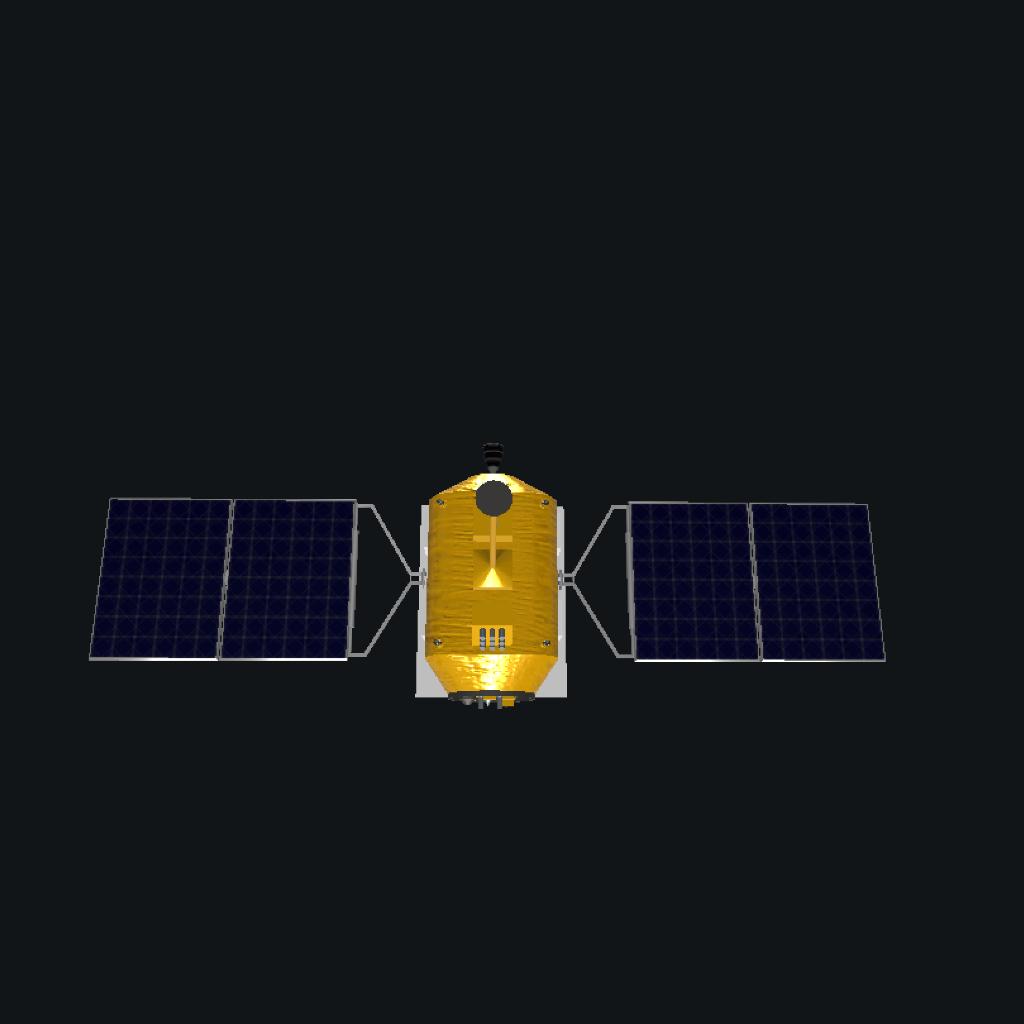
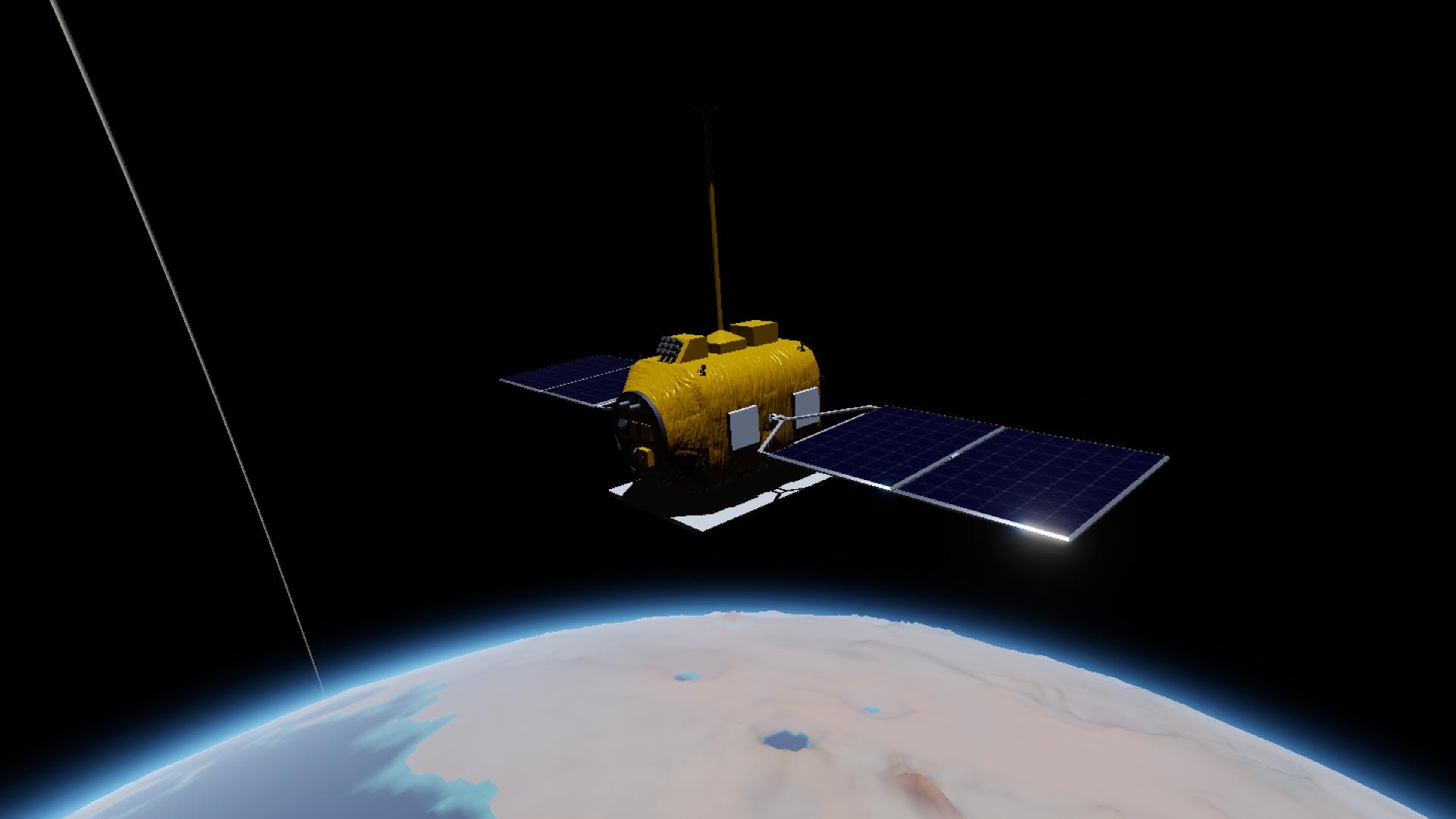
Armida - ISA's first Interplanetary Mission of the 21st Century.
BACKGROUND:
Armida, originally designated Oord Atmospheric Research Orbiter (OARO), was conceived in the early 1990s following the unexpected confirmation that Oord, a recently captured planetesimal in orbit around Sergeaa, possessed a transient equatorial water zone and a rapidly eroding atmosphere. These characteristics made Oord a rare natural laboratory for studying early-stage planetary evolution under extreme tidal and solar stress.
In 1995, the mission was formally selected by the International Space Agency (ISA) as an interplanetary flagship-class scientific mission, with the primary objective of long-term atmospheric loss monitoring and surface–space interaction studies. The spacecraft was later renamed Armida, reflecting its expanded scope beyond atmospheric research to include magnetospheric, dust-ring, and surface evolution investigations.
The construction and integration phase between 1997 and 1999 was marked by significant setbacks. These included repeated delays due to propulsion system valve contamination, redesigns of the ultraviolet imaging system to withstand higher-than-anticipated solar flux near Sergeaa, and structural reinforcements required after vibration anomalies were detected during launch simulation tests. Budget overruns and component shortages further strained the program, pushing final integration dangerously close to the launch window. Despite these challenges, Armida was certified flight-ready in late 1999.
MISSION:
Armida was launched on January 1, 2000, aboard an Atlantis-HLV heavy-lift launch vehicle from Lansberg Launch Site-09. The launch was nominal, placing the spacecraft onto an interplanetary transfer trajectory with minimal corrective burns required during early cruise.
The spacecraft entered a 78-day cruise phase, during which systems were gradually activated and calibrated. Instrument commissioning was completed ahead of schedule, allowing early solar wind and dust environment measurements en route. As Armida approached Sergeaa, it executed a series of trajectory correction maneuvers to align with the planet’s gravitational sphere of influence.
Rather than entering direct orbit around Sergeaa, Armida was inserted into a halo orbit around the Sergeaa–L2 point, providing a dynamically stable staging position for the encounter with Oord. From this vantage point, the spacecraft conducted long-range observations and refined Oord’s mass, ring structure, and orbital parameters.
Final orbital insertion occurred after a carefully timed transfer from L2. Armida executed a 50-minute continuous insertion burn, gradually bleeding off velocity to achieve a stable, low-eccentricity orbit around Oord. The maneuver was considered one of the most technically demanding ever performed for a small-body orbiter and was executed with exceptional precision.
MISSION FINDINGS:
Over its operational lifetime, Armida fundamentally reshaped scientific understanding of young, captured planetesimals:
-Atmospheric Loss Dynamics
Armida confirmed that Oord’s atmosphere was being stripped primarily through solar wind interaction rather than thermal escape. Ion loss rates were found to vary significantly with Sergeaa’s orbital position, demonstrating episodic atmospheric erosion rather than steady decline.
-Weak and Fragmented Magnetosphere
The fluxgate magnetometer revealed that Oord lacked a coherent global magnetic field. Instead, localized crustal magnetism produced transient magnetic bubbles that temporarily shielded limited regions of the surface, particularly near the equatorial water belt.
-Equatorial Water Stability
Observations showed that liquid or semi-liquid water persisted only along the equator, stabilized by a combination of tidal heating, subsurface brine chemistry, and debris infall from Oord’s rings. Seasonal migration and partial sublimation were documented over multiple orbital cycles.
-Ring System Origin and Evolution
Dust counter data demonstrated that Oord’s rings were composed primarily of surface-derived material, likely produced by tidal fracturing and micrometeoroid impacts following its capture by Sergeaa. The rings were found to be dynamically unstable, with measurable mass loss over the mission duration.
-Surface Composition and Youth
Imaging and spectral analysis confirmed a feldspar-dominated crust mixed with iron-rich inclusions and coarse gravel, consistent with incomplete differentiation. Crater morphology suggested widespread resurfacing events within the last few hundred thousand years.
Collectively, Armida’s data provided the first comprehensive observational model of a planetesimal transitioning toward planetary maturity while undergoing active environmental stripping.
END OF MISSION AND LEGACY:
By 2014, Armida’s operational capacity had significantly declined. Prolonged exposure to intense solar radiation near Sergeaa led to progressive solar array degradation, reducing power generation below sustainable thresholds. Simultaneously, propellant reserves had fallen to levels insufficient for long-term orbital maintenance or safe disposal.
Rather than allowing the spacecraft to drift uncontrollably or contaminate Oord’s ring environment, mission controllers elected to perform an intentional controlled impact. Armida was commanded to descend on a carefully selected region of Oord’s surface devoid of equatorial water influence.
The spacecraft impacted Oord at orbital velocity, transmitting final telemetry until signal loss. The impact site later served as a calibration reference point for crater formation models in low-gravity, debris-rich environments.
Armida’s legacy endures as one of the most influential missions in small-body planetary science. Its findings continue to inform models of atmospheric escape, tidal capture mechanics, and early planetary evolution, and it remains a benchmark mission for future exploration of transitional worlds in unstable orbital environments.
GENERAL INFO
- Predecessor: SLS Block 2 + Neptune Odyssey
- Created On: Android
- Game Version: 1.3.204.1
- Price: $3,984k
- Number of Parts: 45
- Dimensions: 5 m x 15 m x 7 m
PERFORMANCE
- Total Delta V: 2.4km/s
- Total Thrust: 2kN
- Engines: 1
- Wet Mass: 15,298kg
- Dry Mass: 4,595kg
STAGES
| Stage | Engines | Delta V | Thrust | Burn | Mass |
|---|---|---|---|---|---|
| 1 | 1 | 2.4km/s | 2kN | 3.83hours | 15,298kg |