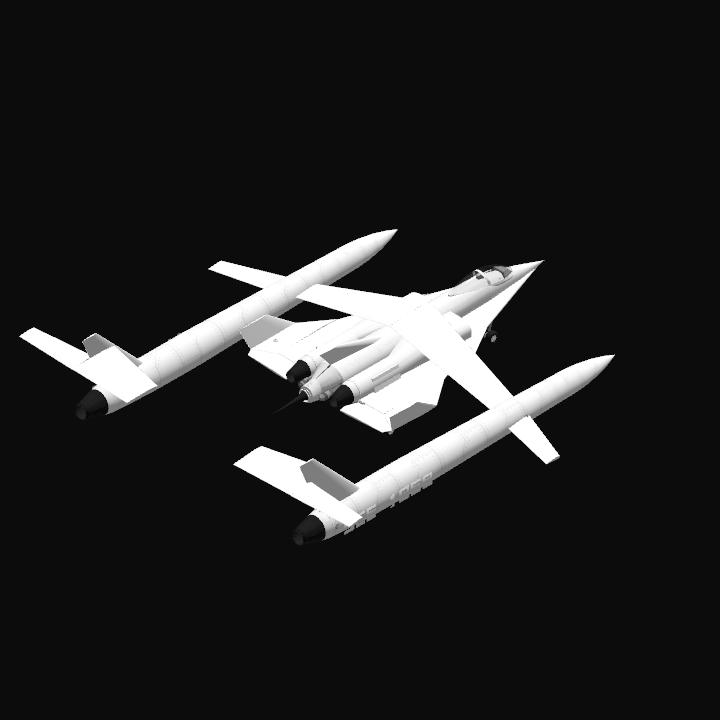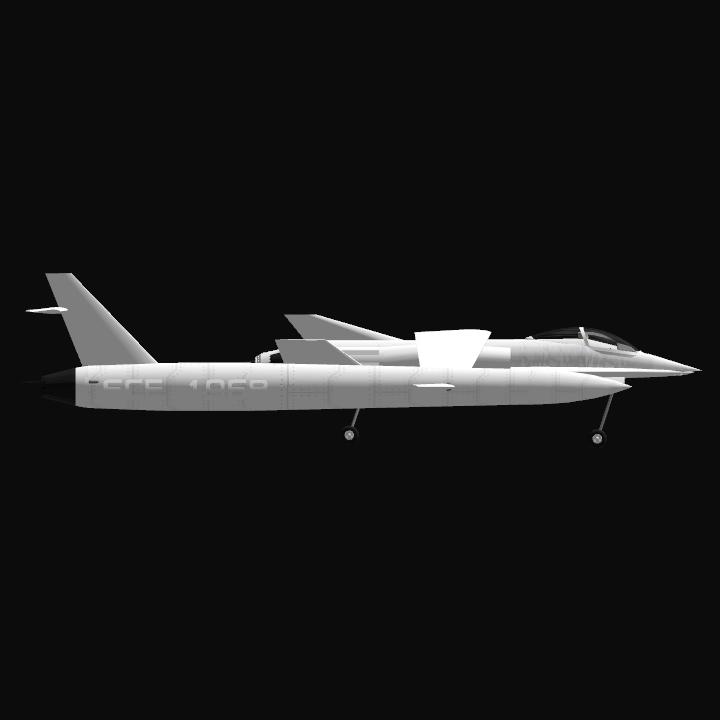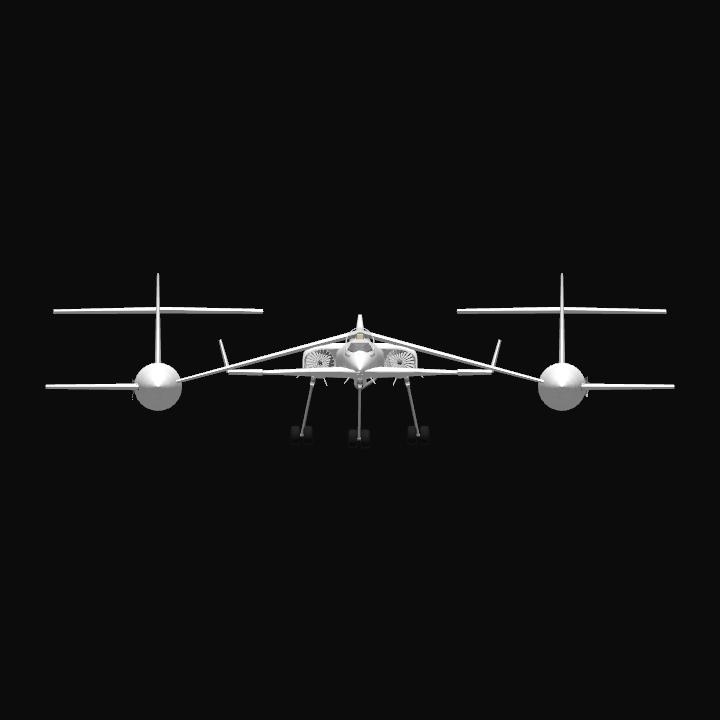

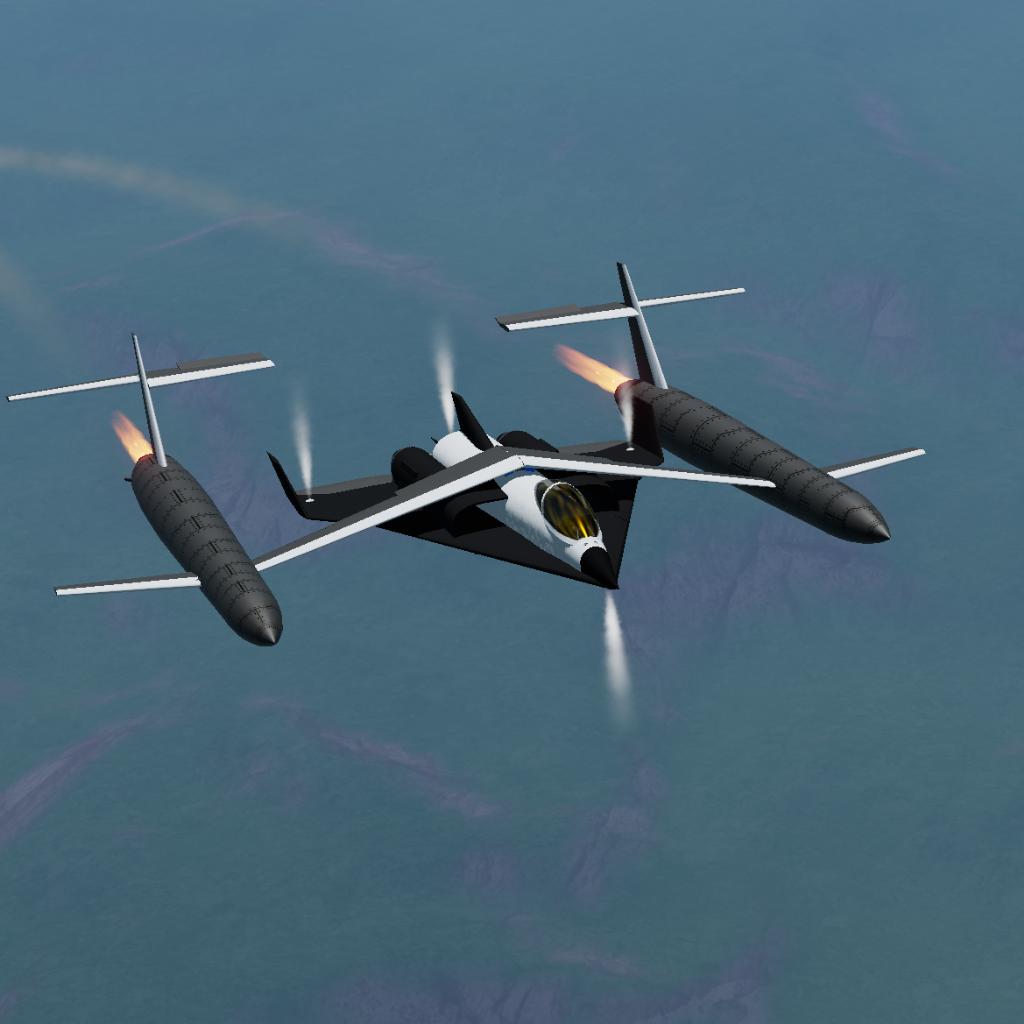
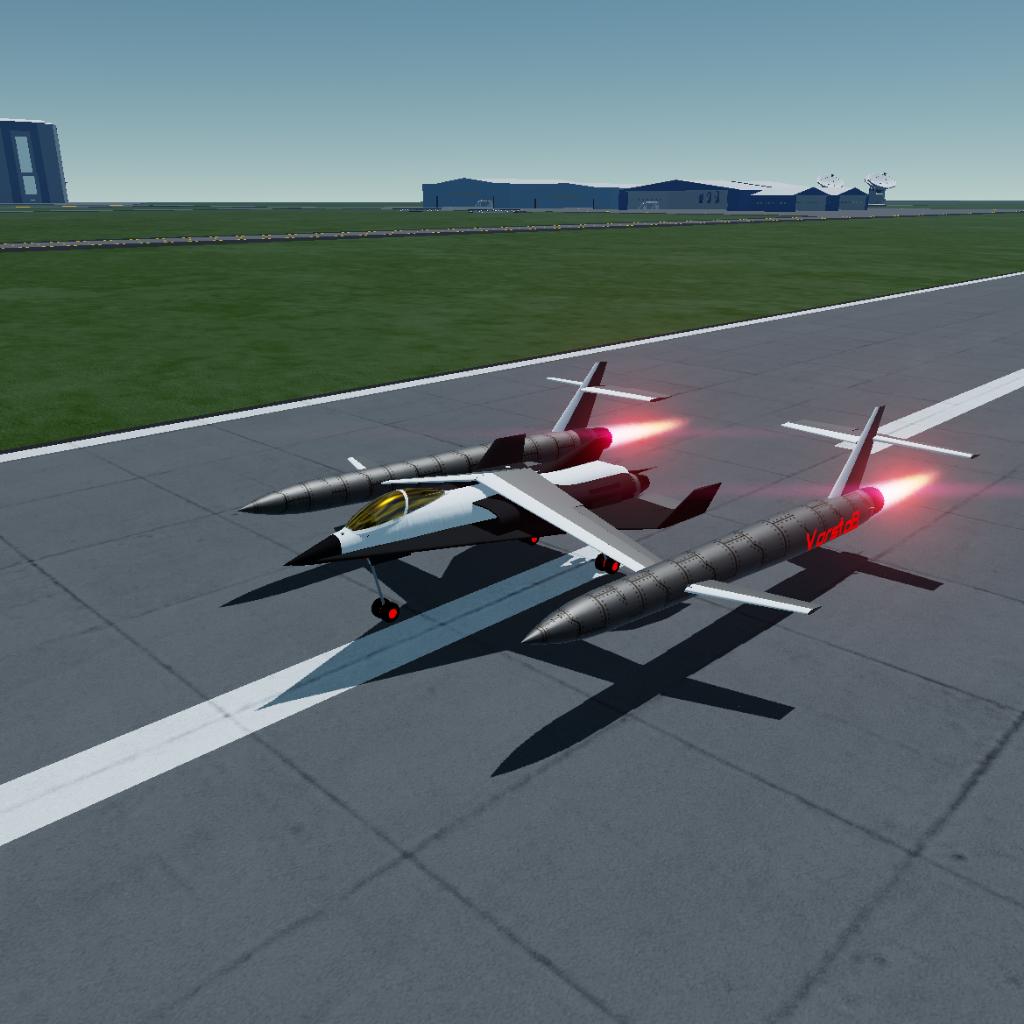
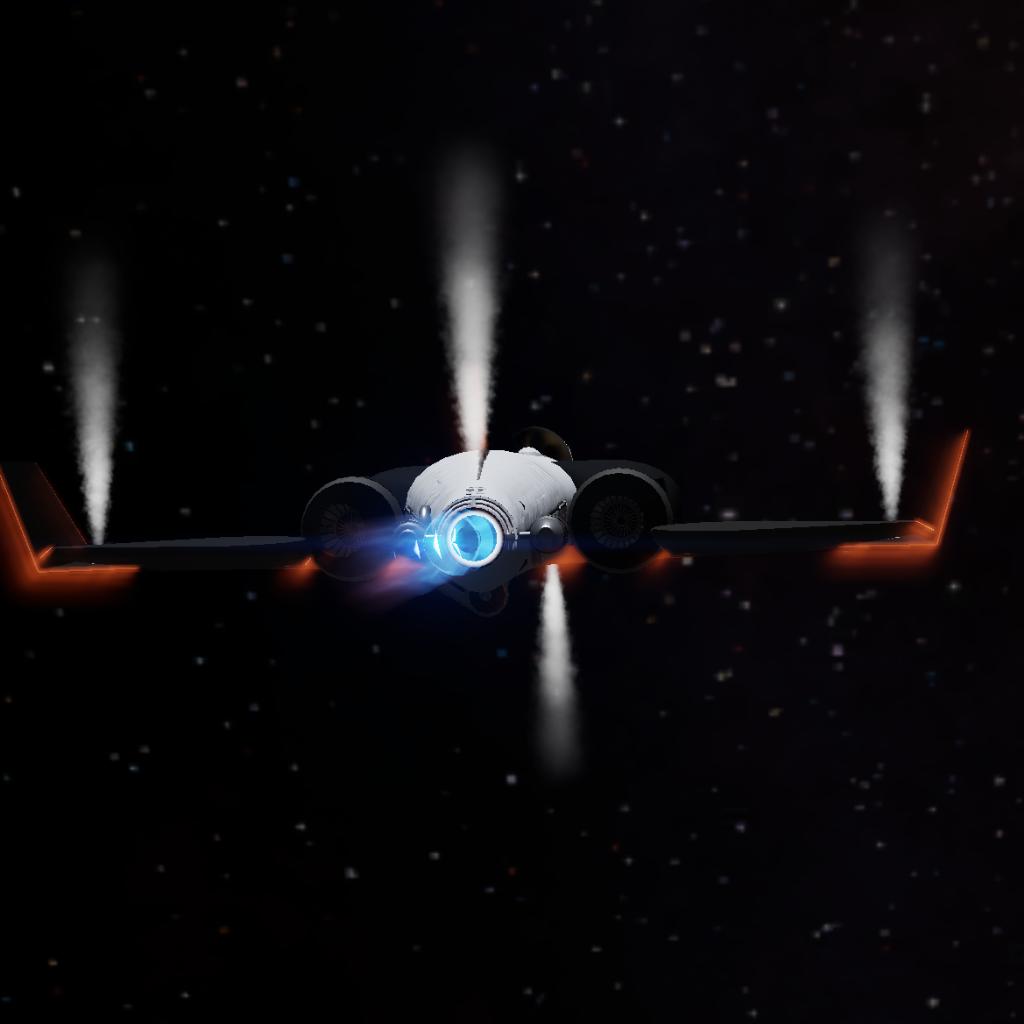
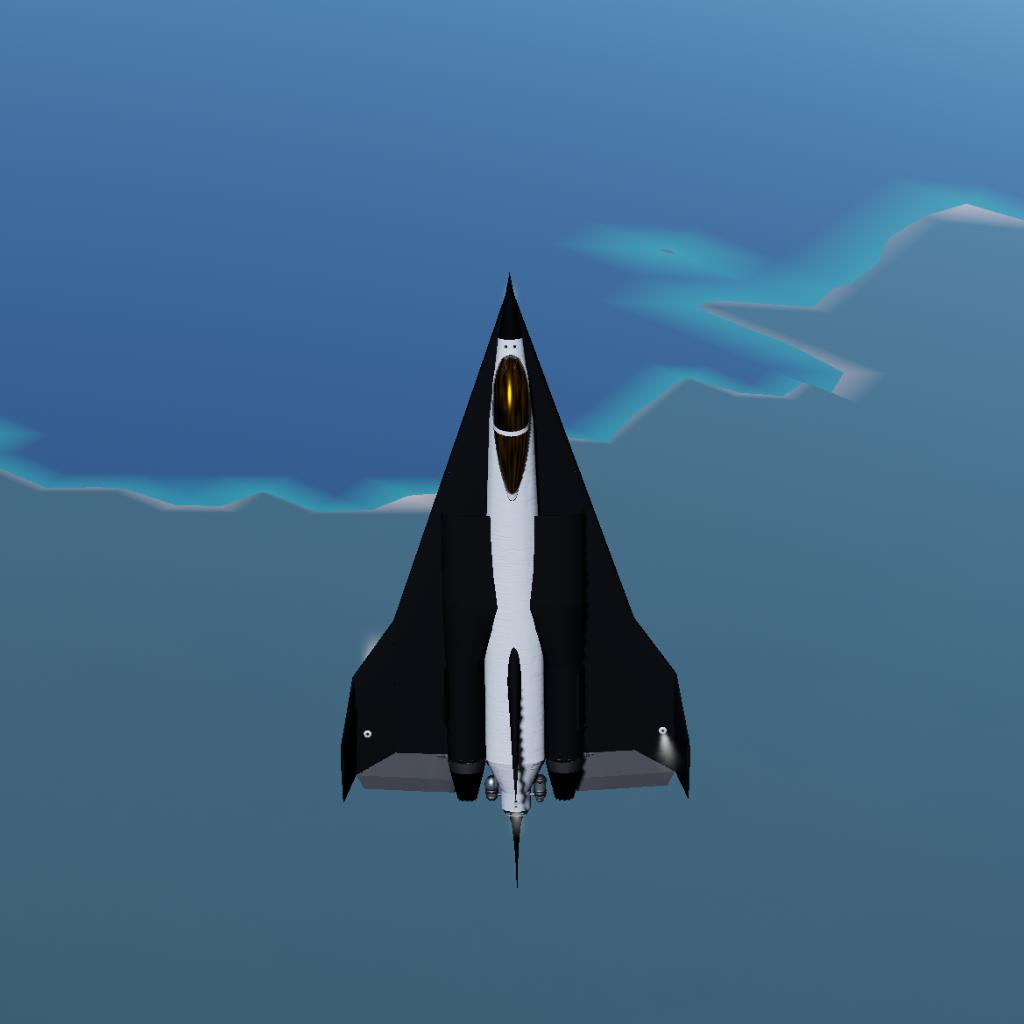
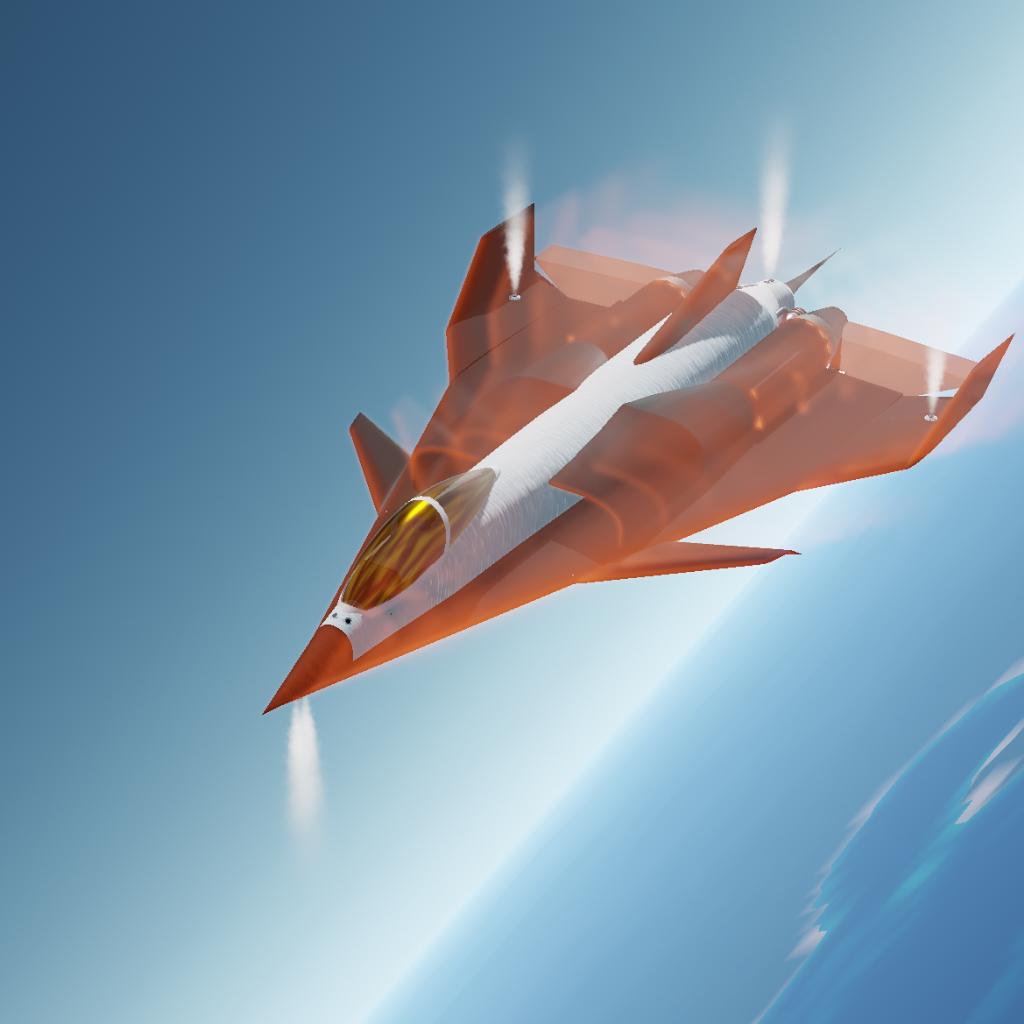
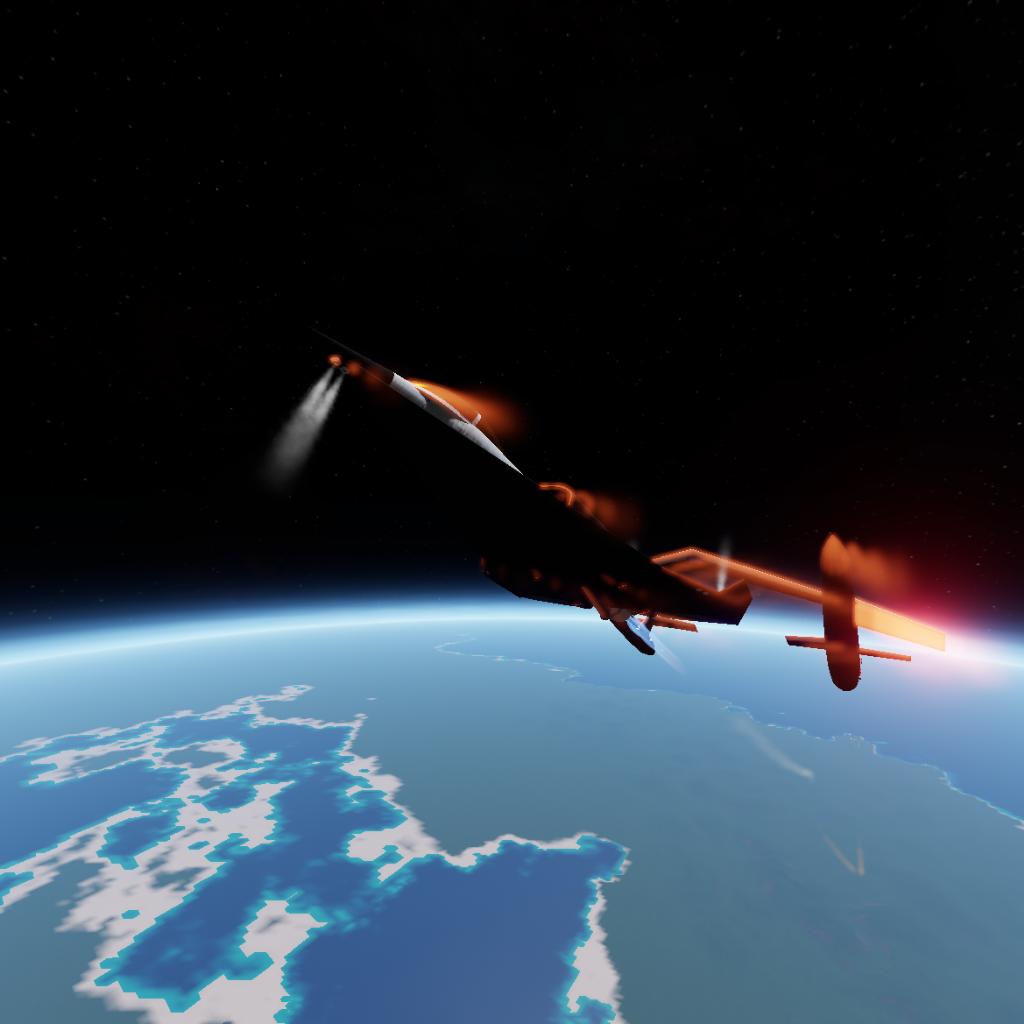
This is SCE 1968 “Vorstoβ” by Schwarzflug Corporation.
This aircraft was built for escape beyond the atmosphere and insertion into suborbital space.
Like the North American X-15, it launches from a carrier aircraft, separates in flight, and aims for suborbital space. Key differences from the X-15 include the carrier aircraft splash-landing and the parasite aircraft bearing its entire weight during takeoff.
With this aircraft, Schwarzflug Corporation gathered extensive suborbital data, gaining a lead over Reichenbach AeroDynamics in the space sector.
The parasite aircraft features a double delta wing configuration. Below 10,000 meters altitude, it deploys smaller wings to achieve superior maneuverability.
Below is the launch sequence. Since the goal is merely reaching 100km altitude, feel free to set your own unique sequence and enjoy the process.
1. Set pitch to 15° with the Guide Sphere, turn on the Carrier JetEngine. After takeoff, retract the landing gear.
2. Maintain the angle and ascend until ASL reaches 10,000m.
3. Once ASL reaches 10,000m, shut down the Carrier JetEngine and activate the Carrier RocketEngine. Turn on RCS and set pitch to 40°.
4. When the Carrier RocketEngine runs out of fuel, activate Eject, set pitch to 30°, and activate the Parasite RocketEngine.
5. When the Parasite RocketEngine runs out of fuel, heading control will automatically disengage.
Following this sequence allows ascent to approximately 100km.
Caution:
Do not adjust Slider 4.
The carrier aircraft has no automatic splashdown capability and cannot splashdown manually. (Though configured to splashdown, it is actually disposable.)
If the pitch angle is too low, escape from the atmosphere will fail.
Be careful not to press the wrong buttons.
This craft has no airbrakes, so be careful about landing speed.
GENERAL INFO
- Created On: iOS
- Game Version: 1.3.205.0
- Price: $45,890k
- Number of Parts: 75
- Dimensions: 5 m x 20 m x 21 m
PERFORMANCE
- Total Delta V: 0m/s
- Total Thrust: 2.4MN
- Engines: 7
- Wet Mass: 43,371kg
- Dry Mass: 16,907kg
STAGES
| Stage | Engines | Delta V | Thrust | Burn | Mass |
|---|