

The solar system is composed of the Sun, eight planets, dwarf planets, asteroids, comets, and numerous other smaller objects. The Sun, a star, dominates the system, with its gravity holding all other objects in orbit.
The eight planets, in order from the Sun, are Mercury, Venus, Earth, Mars, Jupiter, Saturn, Uranus, and Neptune. Beyond the planets are dwarf planets like Pluto, and vast regions like the asteroid belt and the Kuiper belt, which are home to asteroids and icy bodies respectively.
Comets, often described as "dirty snowballs," are also part of the solar system, with their tails becoming visible when they pass close to the Sun.
Key Components of the Solar System:
The Sun:
The central star, providing light and heat, and its gravity governs the orbits of all other objects.
Planets:
Eight large celestial bodies that orbit the Sun, categorized as inner (rocky) and outer (gaseous) planets.
Dwarf Planets:
Smaller celestial bodies, like Pluto, that orbit the Sun but haven't cleared their orbital paths of other debris.
Asteroids:
Rocky remnants from the early solar system, most concentrated in the asteroid belt between Mars and Jupiter.
Comets:
Icy bodies that develop a tail of gas and dust when they approach the Sun.
Moons:
Natural satellites that orbit planets.
Kuiper Belt:
A region beyond Neptune, containing icy bodies and dwarf planets.
Oort Cloud:
A hypothetical cloud of icy objects far beyond the Kuiper Belt, thought to be the origin of long-period comets.
Orbital Paths:
All planets, dwarf planets, asteroids, and comets orbit the Sun in elliptical paths, with the Sun at one focus.
The speed of an object's orbit depends on its distance from the Sun.
Moons orbit planets, not directly around the Sun.
Other Notable Features:
The solar system is mostly empty space, with vast distances between objects.
The solar system is just a small part of the Milky Way galaxy, which contains billions of stars.
Astronomers divide the solar system into regions, including the inner solar system (Mercury to Mars and the asteroid belt) and the outer solar system (Jupiter and beyond).
Massive Updates:
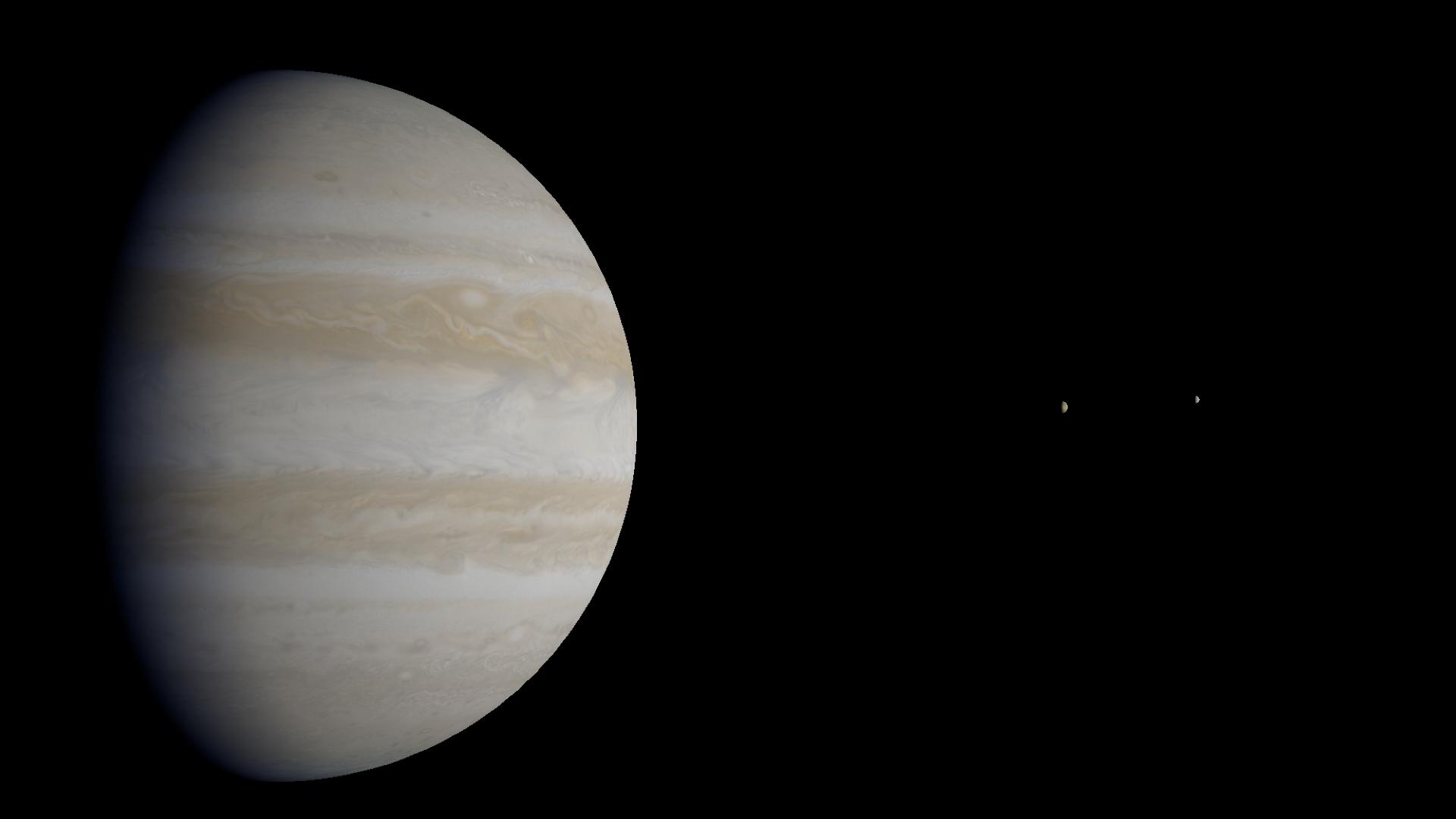
Added Few More Moons For Jupiter
Added The Sea Launch Port On Earth
New Redesign Of The Solar System.
And More.
Enjoy The Experience And A Happy New Year 🎆
GENERAL INFO
- This post has been featured
- Created On: Android
- Game Version: 1.3.205.0
CELESTIAL BODIES
| Name | Parent | Radius | Surface Gravity | Apoapsis | Periapsis |
|---|---|---|---|---|---|
| Sol | 563.8 Mm | 120.0 m/s | - | - | |
| Mercury | Sol | 2,948 km | 1.6 m/s | 46,222.8 Mm | 28,487.7 Mm |
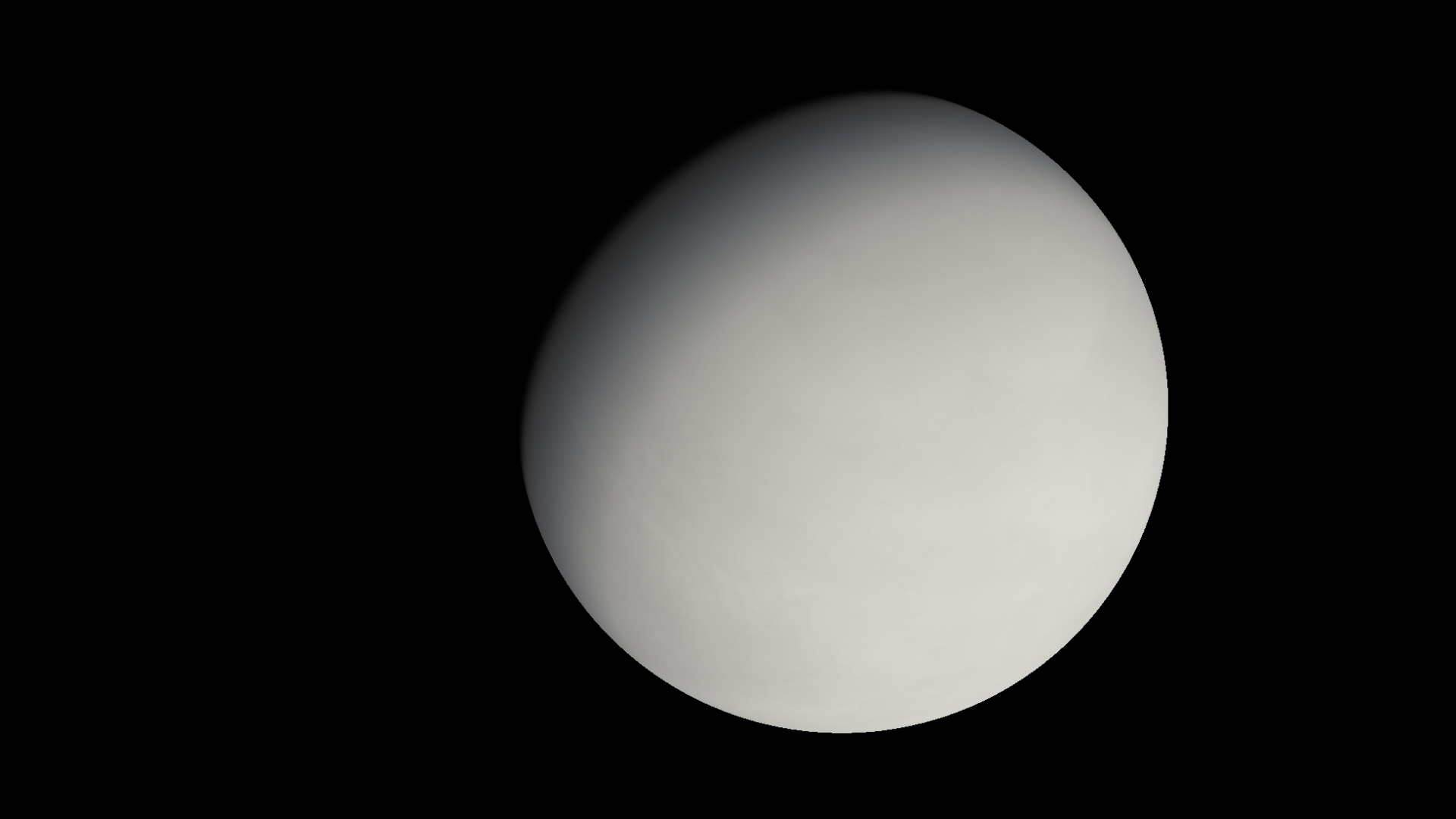
| Venus | Sol | 6,037 km | 8.7 m/s | 73,422.4 Mm | 69,097.8 Mm |
| Earth | Sol | 6,371 km | 9.8 m/s | 99,483.7 Mm | 99,284.9 Mm |
| Moon | Earth | 1,274 km | 1.7 m/s | 387.7 Mm | 386.9 Mm |
| 2024 PT5 | Earth | 1,000 m | 0.4 m/s | 1,123.7 Mm | 488.2 Mm |
| Bennu | Sol | 2,318 m | 0.0 m/s | 135,822.5 Mm | 111,436.4 Mm |
| Mars | Sol | 4,000 km | 7.5 m/s | 157,842.6 Mm | 114,652.1 Mm |
| Phobos | Mars | 184 km | 0.4 m/s | 36,721 km | 36,648 km |
| Deimos | Mars | 184 km | 0.4 m/s | 82,382 km | 82,217 km |
| 1999 JU9 | Sol | 23 km | 0.4 m/s | 223,278.8 Mm | 172,439.6 Mm |
| 1994 PC1 | Sol | 1,050 m | 0.0 m/s | 248,923.7 Mm | 214,522.3 Mm |
| Ilnillon | Sol | 24 km | 0.0 m/s | 373,755.1 Mm | 152,146.0 Mm |
| Pallas | Sol | 257 km | 0.2 m/s | 280,571.5 Mm | 252,565.0 Mm |
| Didymos | Sol | 3,000 m | 0.4 m/s | 305,652.8 Mm | 239,551.9 Mm |
| Dimorphos | Didymos | 1,291 m | 0.4 m/s | 66 km | 65 km |
| Ceres | Sol | 174 km | 1.7 m/s | 288,555.6 Mm | 269,824.1 Mm |
| Vesta | Sol | 127 km | 1.5 m/s | 340,435.2 Mm | 311,494.8 Mm |
| 67P/Churyumov Gerasimenko | Sol | 23 km | 0.4 m/s | 548,578.6 Mm | 163,525.5 Mm |
| Jupiter | Sol | 65,000 km | 24.0 m/s | 492,230.8 Mm | 491,247.4 Mm |
| Metis | Jupiter | 23 km | 0.4 m/s | 547.2 Mm | 237.7 Mm |
| Io | Jupiter | 2,104 km | 7.0 m/s | 422.4 Mm | 421.6 Mm |
| Europa | Jupiter | 2,006 km | 7.0 m/s | 783.7 Mm | 782.2 Mm |
| Ganymede | Jupiter | 2,366 km | 7.0 m/s | 1,420.6 Mm | 1,417.7 Mm |
| Callisto | Jupiter | 1,903 km | 7.0 m/s | 2,248.5 Mm | 2,244.0 Mm |
| Elara | Jupiter | 93 km | 0.4 m/s | 5,131.1 Mm | 4,350.2 Mm |
| Cyllene | Jupiter | 18 km | 0.1 m/s | 7,104.7 Mm | 4,258.6 Mm |
| Adrastea | Jupiter | 7,210 m | 0.1 m/s | 7,828.3 Mm | 5,979.8 Mm |
| LXIII | Jupiter | 49 km | 0.3 m/s | 8,672.9 Mm | 5,135.2 Mm |
| Amalthea | Jupiter | 53 km | 0.4 m/s | 8,973.5 Mm | 7,691.3 Mm |
| Thyone | Jupiter | 9,180 m | 0.2 m/s | 11,677.7 Mm | 8,919.7 Mm |
| 8P-Tuttle | Sol | 9,582 m | 0.1 m/s | 1,157,469.3 Mm | 176,018.1 Mm |
| Saturn | Sol | 64,000 km | 15.2 m/s | 943,327.7 Mm | 941,442.9 Mm |
| Pan | Saturn | 17 km | 0.4 m/s | 247.5 Mm | 247.0 Mm |
| Methone | Saturn | 20 km | 0.4 m/s | 377.8 Mm | 377.0 Mm |
| Mimas | Saturn | 450 km | 1.6 m/s | 540.8 Mm | 539.7 Mm |
| Enceladus | Saturn | 550 km | 2.0 m/s | 1,028.8 Mm | 1,026.8 Mm |
| Dione | Saturn | 550 km | 2.8 m/s | 1,396.4 Mm | 1,393.6 Mm |
| Tethys | Saturn | 550 km | 1.8 m/s | 2,002.3 Mm | 1,998.3 Mm |
| Rhea | Saturn | 350 km | 1.6 m/s | 2,650.9 Mm | 2,645.6 Mm |
| Peggy | Saturn | 23 km | 0.4 m/s | 3,668.6 Mm | 3,213.8 Mm |
| Titan | Saturn | 2,974 km | 4.6 m/s | 5,772.5 Mm | 5,760.9 Mm |
| Hyperion | Saturn | 16 km | 0.4 m/s | 8,435.7 Mm | 6,017.9 Mm |
| Iapetus | Saturn | 650 km | 2.4 m/s | 9,348.2 Mm | 9,329.5 Mm |
| Phoebe | Saturn | 23 km | 0.4 m/s | 15,595.9 Mm | 9,829.7 Mm |
| Uranus | Sol | 25,000 km | 9.9 m/s | 1,401,400.0 Mm | 1,398,600.0 Mm |
| Oberon | Uranus | 250 km | 1.7 m/s | 180.5 Mm | 180.2 Mm |
| Titania | Uranus | 250 km | 1.7 m/s | 352.4 Mm | 351.7 Mm |
| Miranda | Uranus | 550 km | 7.0 m/s | 559.2 Mm | 558.1 Mm |
| Umbriel | Uranus | 250 km | 1.7 m/s | 822.0 Mm | 820.4 Mm |
| Ariel | Uranus | 250 km | 1.7 m/s | 1,104.7 Mm | 1,102.4 Mm |
| Mab | Uranus | 20 km | 0.4 m/s | 2,249.6 Mm | 1,294.5 Mm |
| Halley | Sol | 9,318 m | 0.4 m/s | 2,917,125.1 Mm | 82,874.9 Mm |
| Neptune | Sol | 24,000 km | 8.4 m/s | 2,002,000.0 Mm | 1,998,000.0 Mm |
| Triton | Neptune | 550 km | 1.7 m/s | 238.5 Mm | 238.1 Mm |
| Proteus | Neptune | 22 km | 0.1 m/s | 612.0 Mm | 259.4 Mm |
| Nereid | Neptune | 23 km | 0.4 m/s | 848.3 Mm | 743.1 Mm |
| Hippocamp | Neptune | 23 km | 0.4 m/s | 1,281.6 Mm | 1,166.3 Mm |
| Despina | Neptune | 23 km | 0.4 m/s | 1,803.8 Mm | 1,771.2 Mm |
| Larissia | Neptune | 23 km | 0.4 m/s | 3,564.9 Mm | 2,199.2 Mm |
| Pluto | Sol | 784 km | 1.9 m/s | 2,598,513.5 Mm | 2,001,486.5 Mm |
| Charon | Pluto | 394 km | 2.6 m/s | 21,141 km | 21,099 km |
| Nix | Pluto | 23 km | 0.4 m/s | 41,801 km | 41,717 km |
| Styx | Pluto | 23 km | 0.4 m/s | 91,918 km | 91,734 km |
| Hydra | Pluto | 23 km | 0.4 m/s | 123.0 Mm | 122.8 Mm |
| Kerboros | Pluto | 23 km | 0.4 m/s | 166.2 Mm | 165.8 Mm |
| Haumea | Sol | 710 km | 0.4 m/s | 3,036,543.8 Mm | 2,563,456.2 Mm |
| Namaka | Haumea | 83 km | 1.4 m/s | 23,131 km | 20,060 km |
| Hiiaka | Haumea | 93 km | 1.6 m/s | 47,964 km | 44,234 km |
| Makemake | Sol | 450 km | 1.6 m/s | 3,670,602.8 Mm | 3,129,397.2 Mm |
| MK2 | Makemake | 53 km | 0.1 m/s | 24,423 km | 24,374 km |
| Eris | Sol | 503 km | 7.9 m/s | 8,081,648.7 Mm | 3,718,351.3 Mm |
| Dysnomia | Eris | 184 km | 3.2 m/s | 22,752 km | 22,706 km |
| Sedna | Sol | 410 km | 7.1 m/s | 196,590,000.4 Mm | 3,409,999.6 Mm |
@Tallisar Does that mean I need to increase the delta v to ~11.20km/s?
Because Earth has an escape velocity of ~11.19 km/s, @CarlosMusk.
Why can't I leave Earth? I have a delta V of 7.55 km/s.
@NHI nevermind yo
mobile freindly(ish) RSS lmao
@ZJHHTJD Yes!And Titan
@RangerLC Such as ... Venus?
@RangerLC Remember, You Cannot Reach Into Any Planets Unless You Have Enough Delta V.
Some planets couldn't be landed...
@AlphaSpaceTechnologies you know, it isn't accurate.
Is this accurate? if so, i might try it
@InherentUnstable Earth Has Kennedy Space Center, Baikunor, Vandenberg Space Center, Guiana Space Center And More.
What launch sites do you have on Earth?
@MasterOfNone943 The Memory Has A Lot Due To It's Realistc Textures, Dozens Of Celestial Bodies And It Works Well At High Resolution, The Higher Memory Is Recomended Such As Android 13-16 And iOS 15-26, The Size File Of The RSS 4.0 Is Between 100MB-2GB, This Can Work Well On The PC, So It Needs More Storage For Mobile To Ensure That It Works Well.
Awesome. How much memor does this need?
@Tallisar It Got Featured Because This Was Posted On The New Year Event, And While It Was Posted In 1st Of January, They Got A Notification Of It Or Found It In A Different Content List, And It Got More Upvotes For Days, And When This Planetary System Got A 9th Upvote, It Was Featured, That's Why It Worked Out Very Well.
How and why did this get featured.
This deserves a trillion upvotes.
@Manof5Moths I was on mobile so I went to files and find the file of this planetary system, after I found it and went inside of the file, I've changed the orbit period for sedna and the other outer celestial bodies.
asking because i don't know how to make posts on forums, how do you set a planet's semi major axis past 1000gm / 1000000mm? is there some tutorial or trick i don't know about?
@RudimentaryCheezit idk where it went...but it just went quickly...especially 2025...that year went damn fast
@RudimentaryCheezit At 1 PM, This Version Is Out. At 12 AM, The Year Is New.
i can't believe it's 2026 already!!
where did all the time go?
@Cooldude88 thanks :)
i have pushed you to 3,000 points