

Part of a series on TritonAerospace's lore. | Separated from Main post to keep simplicity.
Following the TL-5's inception in late 2025, Rokugou Systems Development decided that, to make the most of the entire weapons network, they had to Communicate with each other properly. this led Penny and CEO down a pretty long and slow chain of events. what started as a simple project to build an AWACS system quickly spiraled into development for a tactical datalink network — A.N.N.A.
Let's start from the top though.
With the TL-5 entering service with DSC, it became very apparent how disconnected everything was. while IFF was available on later aircraft and SAM systems, it wasn't universal and surely wasn't perfect. Rokugou Systems set out to solve this issue by creating an AWACS platform that would help coordinate aircraft across branches. This matured into the EQ-70 prototypes. However, the issue still persisted even with AWACS on site: integration was slow and of low quality. so, going back to the drawing board, the development team chalked it down to an issue surrounding lack of software. this was a simple fix. just build some code centered on the AWACS, right? wrong. it took multiple prototypes, dozens of simulations, and countless reworks to get it to integrate with another fighter in the area. however, the team eventually got it done.
after doing some research on similar systems, however, it became apparent that there was no system similar to A.N.N.A. not at the scale that Rokugou Systems planned, at least. it was a bit shocking to be first to do something as a company, but the excitement from it was eventually shaken off.
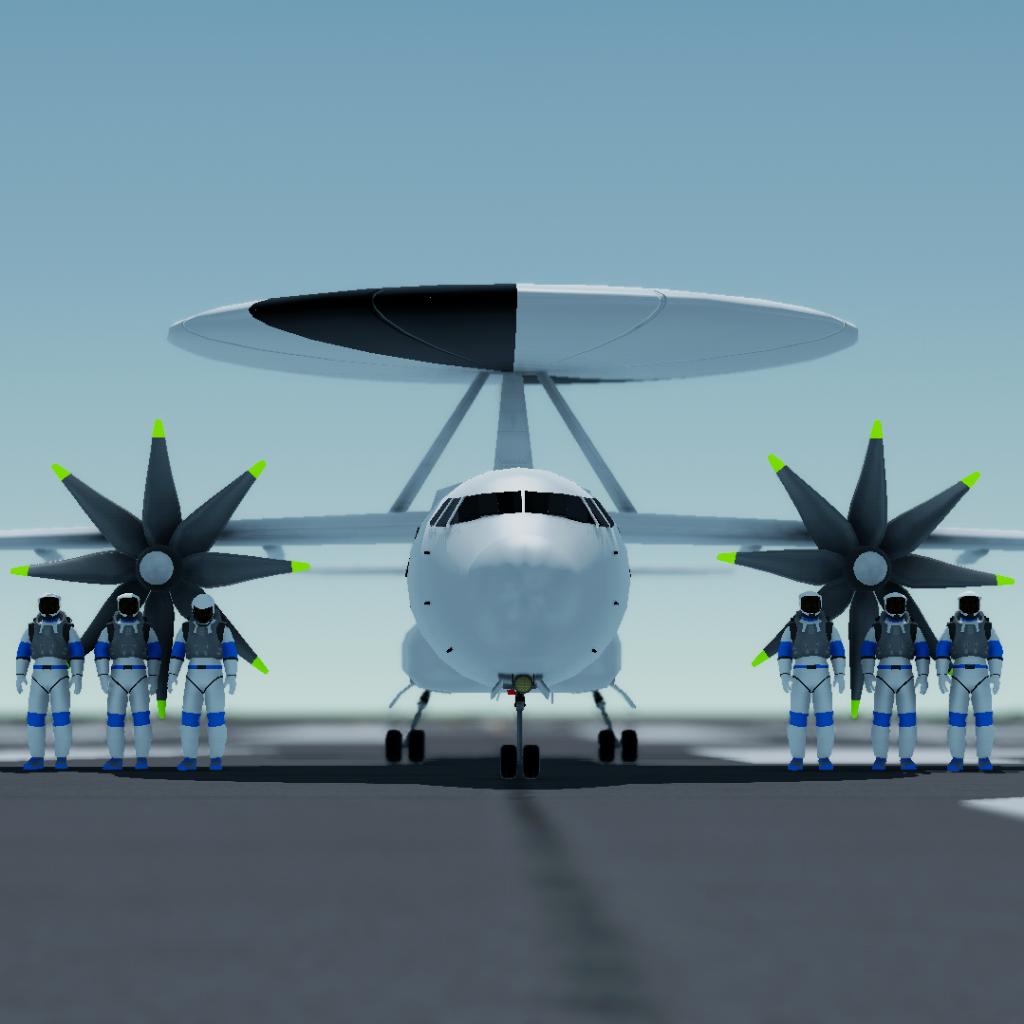
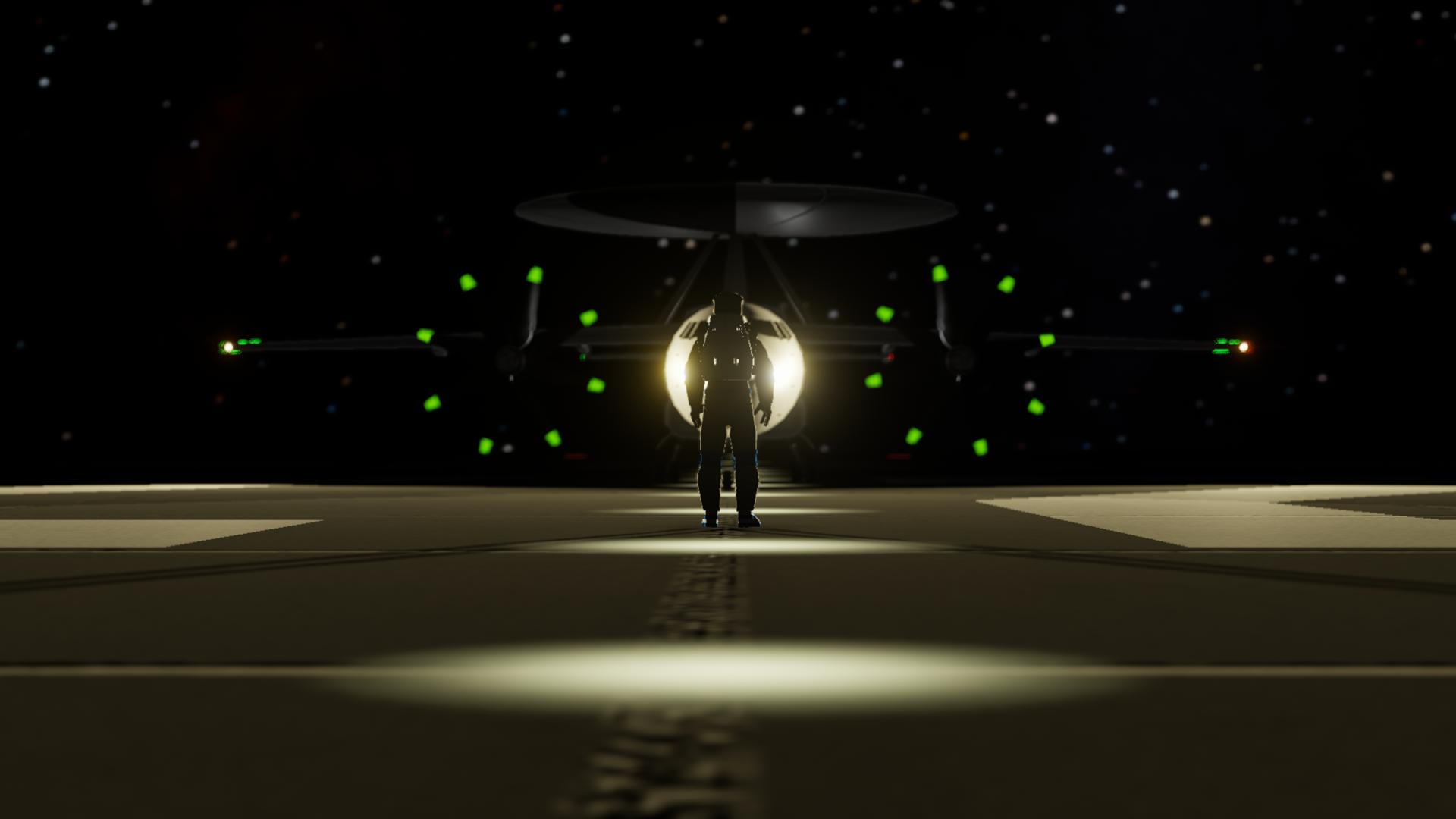
Where the real excitement is, however, is the inception of the new squadrons. the first fully ready E-70 Magpie (The name was suggested by Dr. Matthias Matteucci and voted upon by the Research & Development Department) to roll off the production line, 09E70, was delivered to a brand new squadron to handle flying the aircraft: VCW-1, "The Sundials". They are an air guard squadron operating 5 E-70As out of the main aerodrome for air monitoring operations, early warnings, and command/control, as well as operating as a network hub for datalink operations.
Since The Sundials were the first squadron to operate the E-70A, the squadron thought it'd be a good idea to snap a few pictures in front of the aircraft: One during the day, with the flight team standing by it, and one during the night, with the crew chief standing in front of it. these came out as great pictures in the eyes of Rokugou Systems.
With that, however, the system wasn't going to integrate itself into other systems, and RSYS had a lot of work to do if they wanted to get it done in a reasonable amount of time.
🔥🔥🔥