

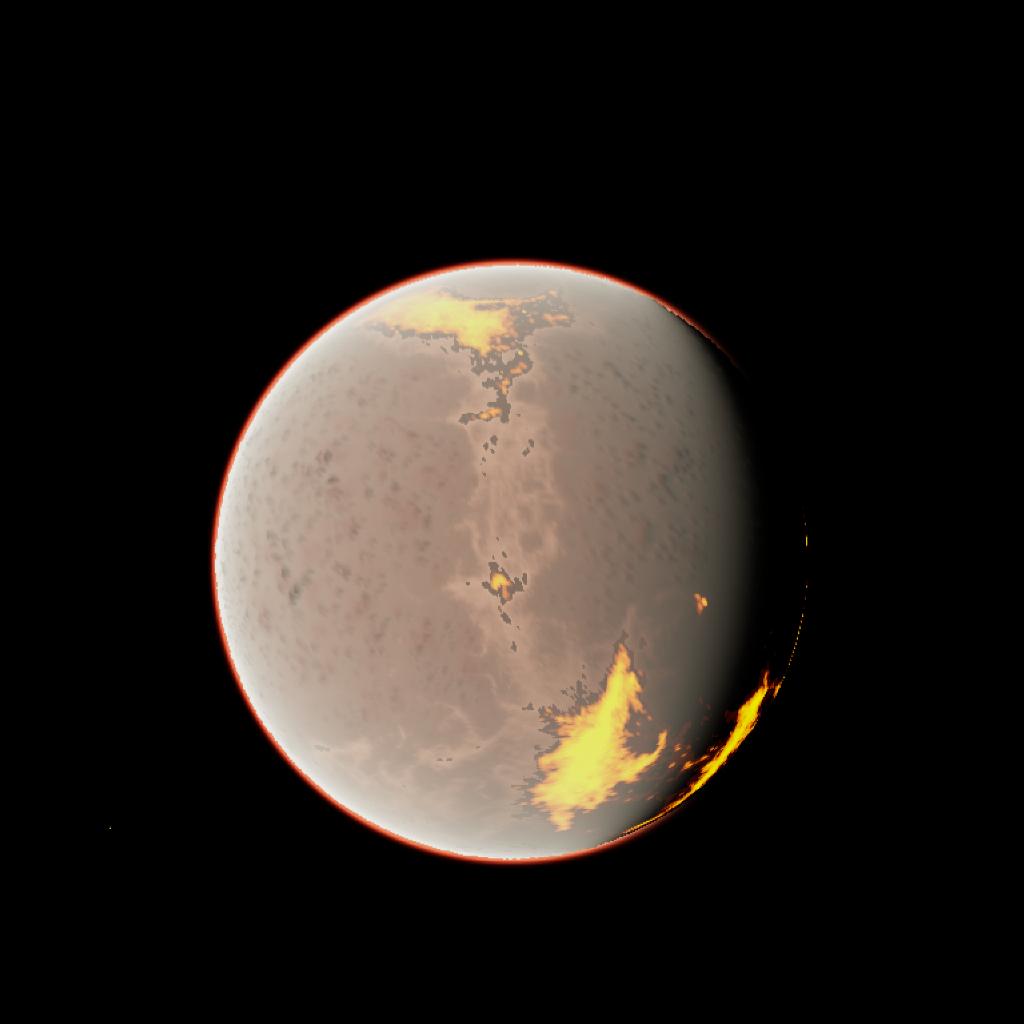
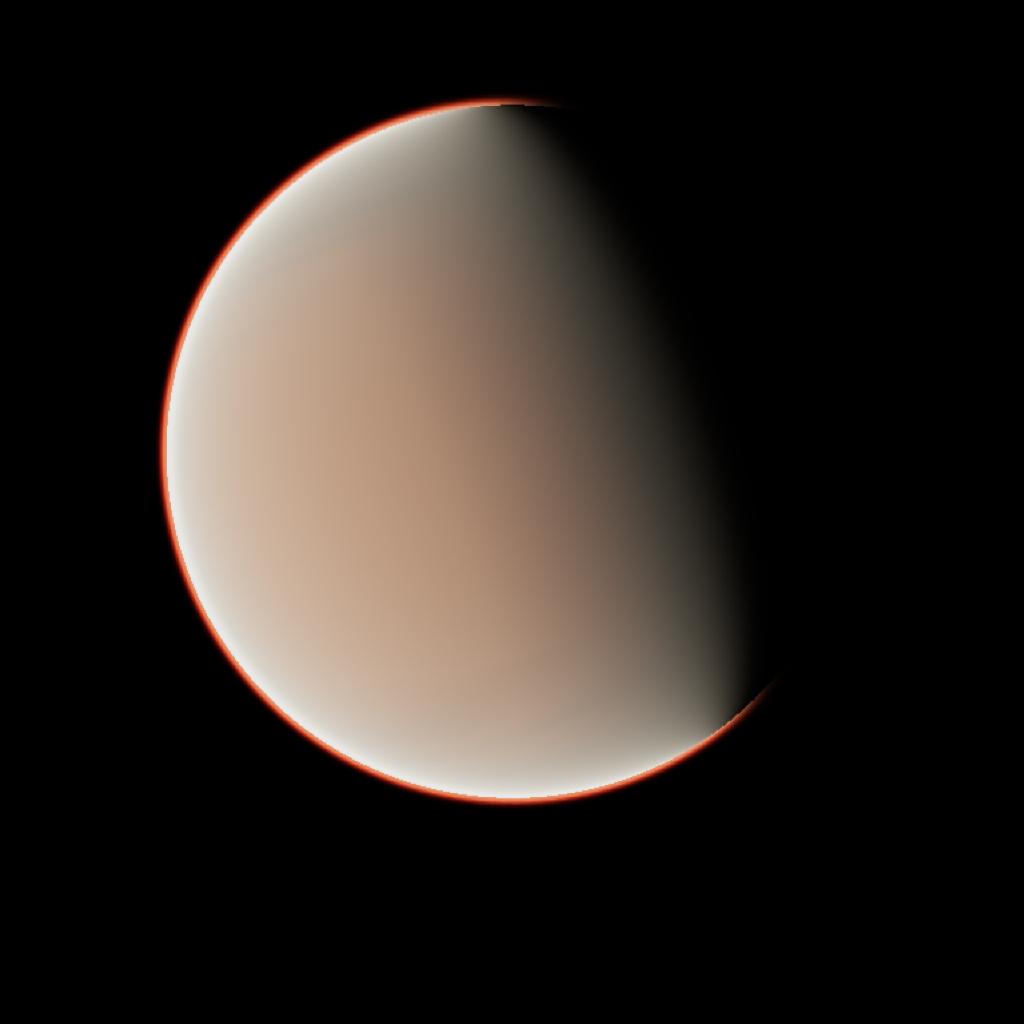
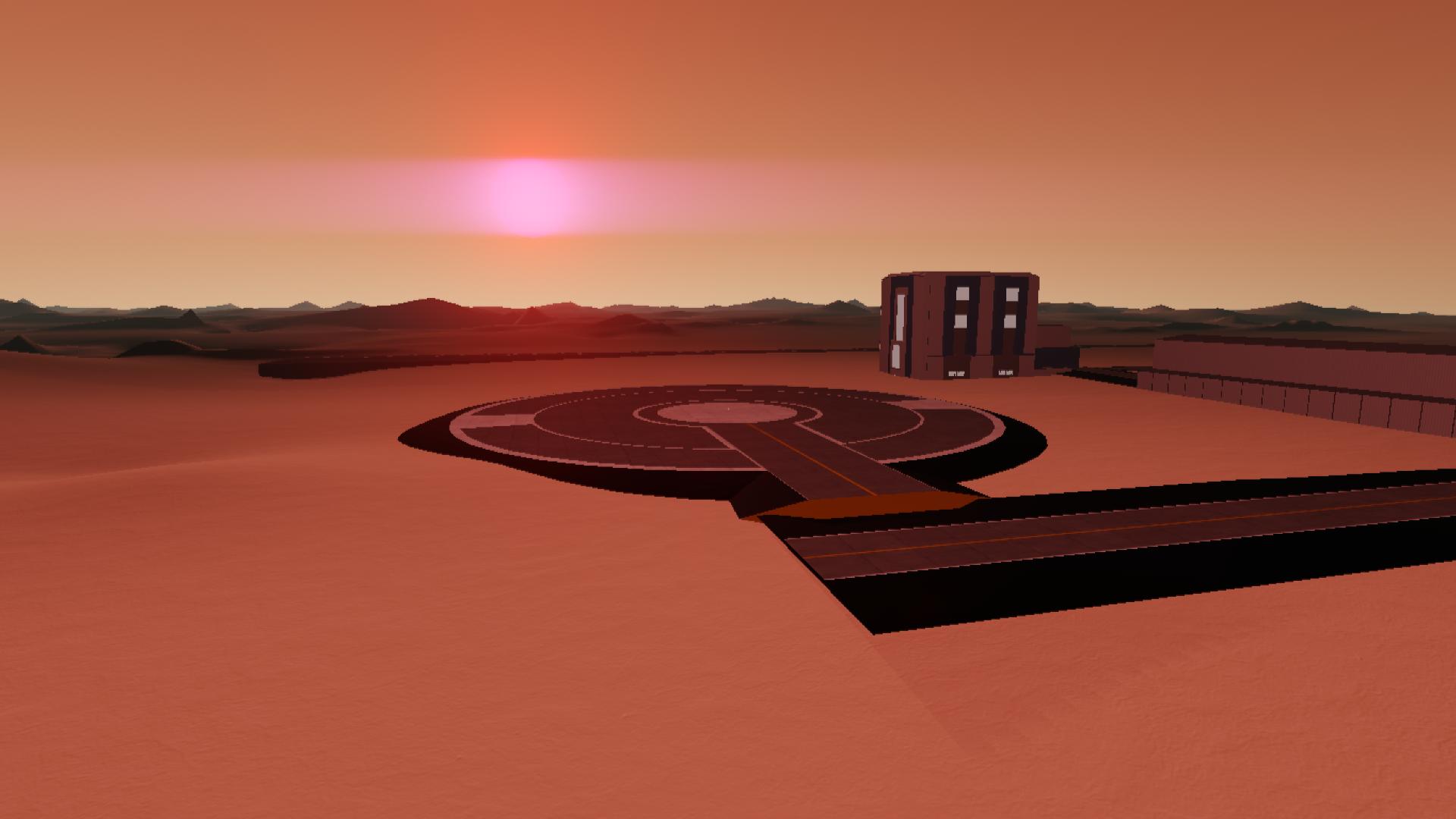
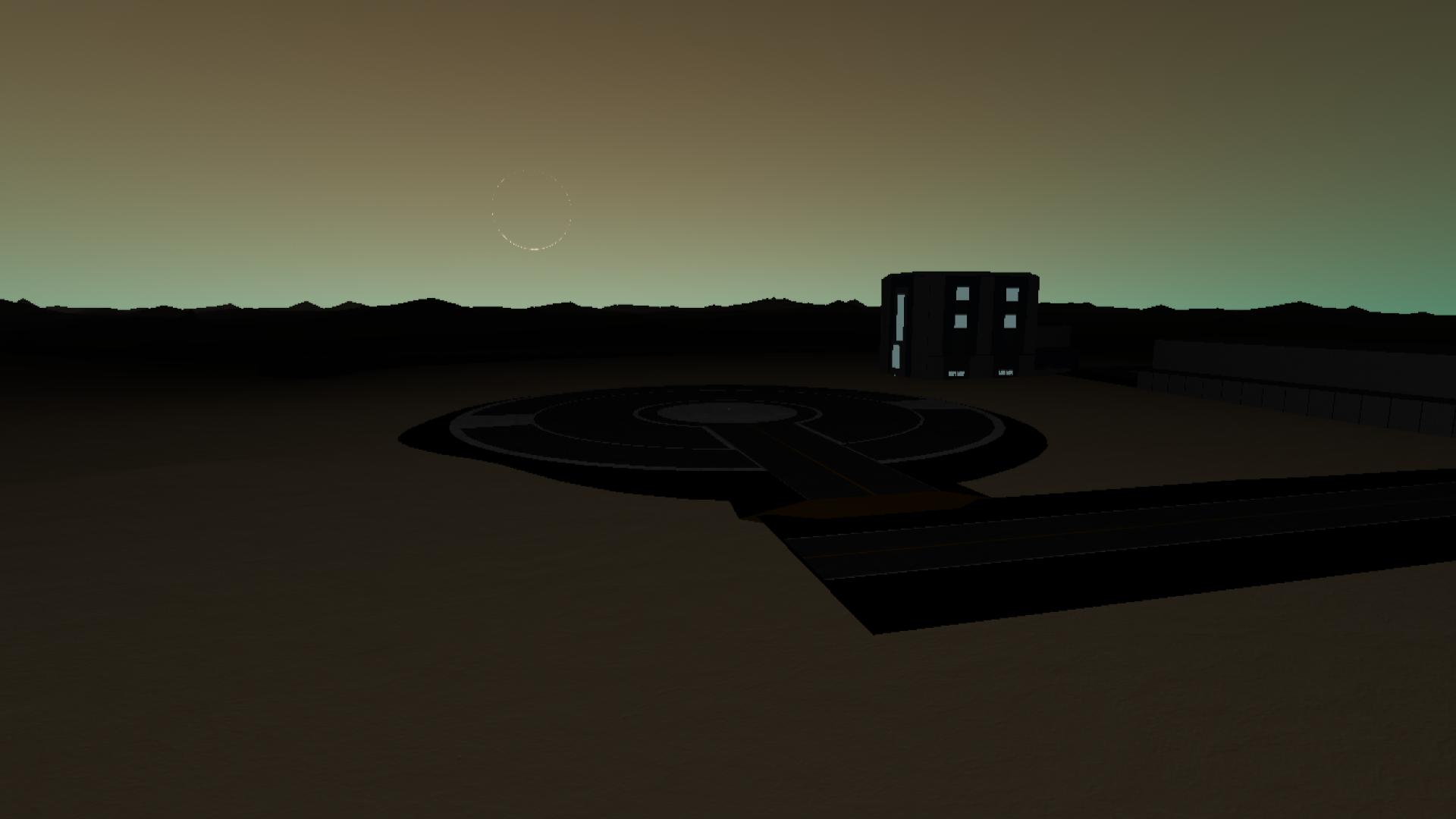
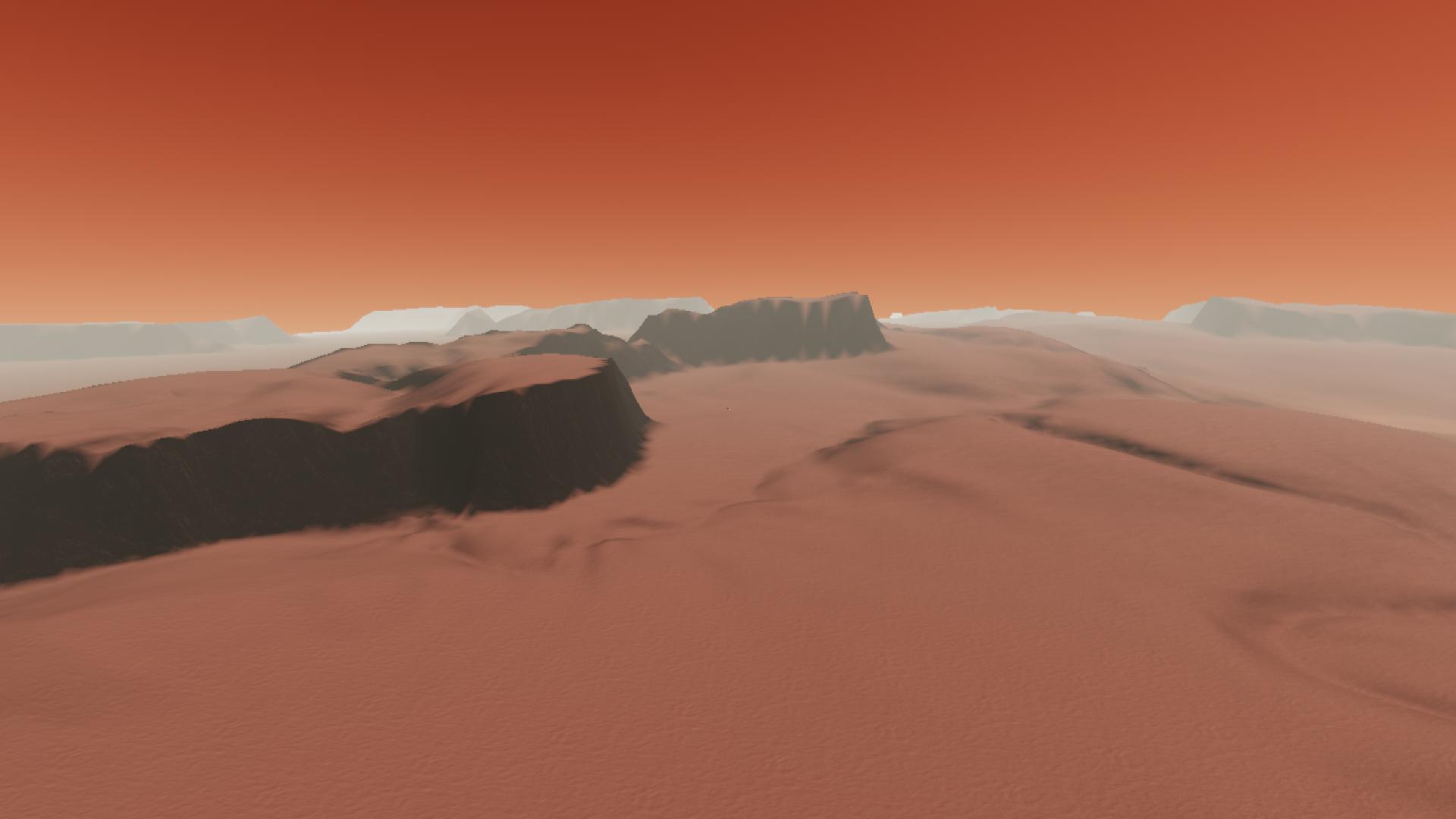
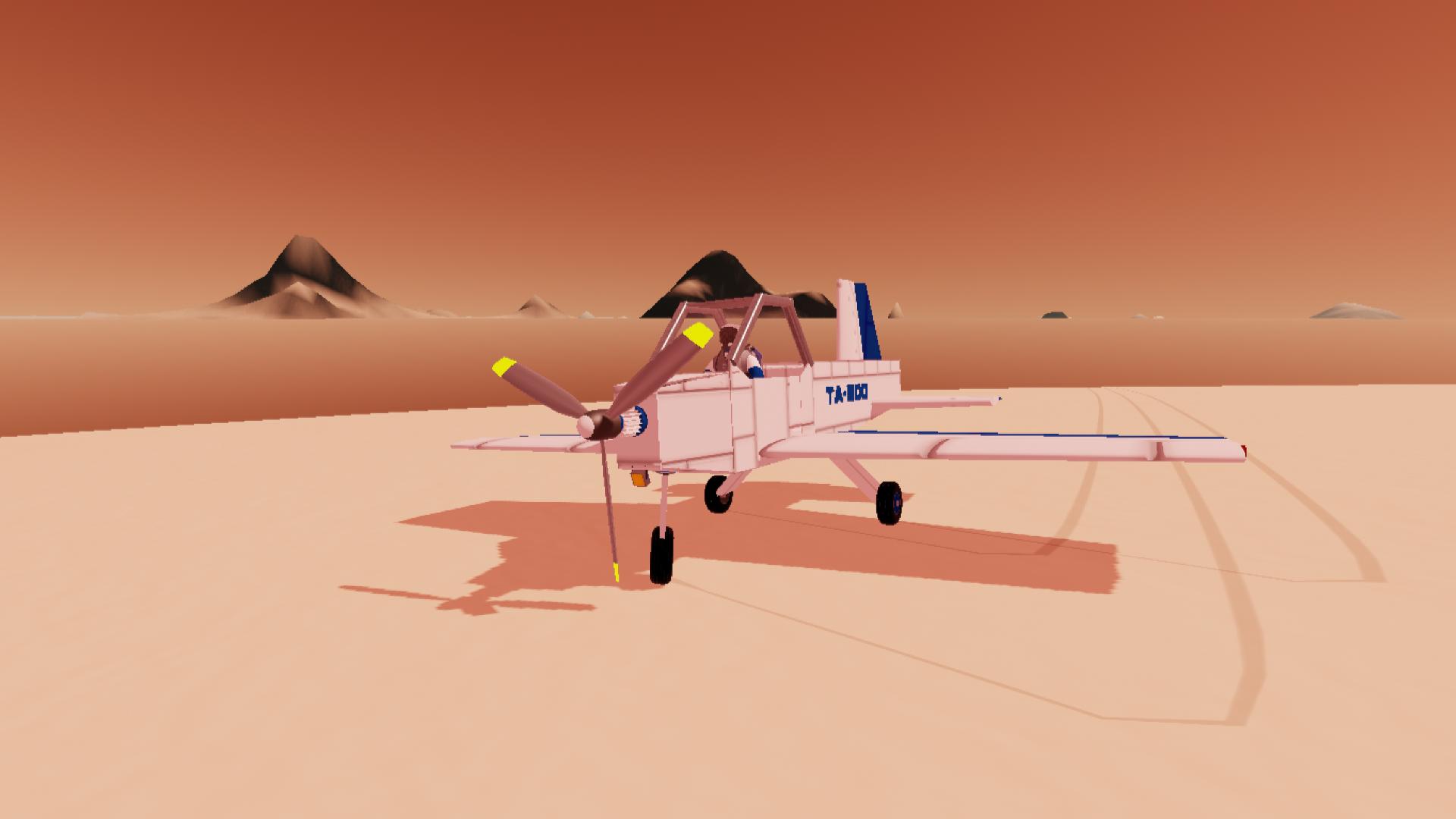
Whether you get the reference or not, Helleska is peculiarly cold, and reddish in color. The atmosphere is quite thick, and makes rocketry fairly difficult. Many landforms are present, such as: Dried rivers and lakebeds (remnants of a past age), lava lakes, plateaus, mountains, plains, and more.
GENERAL INFO
- Created On: Android
- Game Version: 1.3.204.1
CHARACTERISTICS
- Radius: 1,036 km
- Sea Level: 0 m
- Surface Gravity: 7.0 m/s
- Rotational Period: 41d 16h
- Escape Velocity: 3.81 km/s
- Mass: 1.13E+23kg
Atmosphere
- Height: 119 km
- Scale Height: 17 km
- Surface Air Density: 5.099 kg/m3
- Surface Temperature: 357 K
EQUIRECTANGULAR MAP
13 Comments
- Log in to leave a comment
-
1,195 ToadAeronautics+1 4 months ago
@Tallisar I stand corrected. Not even going to try to argue because I have no valid point. I actually appreciate that you took your time to look into this, it is interesting to see what the circumstances would have to be for a world like this to develop.
-
-
22.4k Tallisar4 months ago
1) It depends on what or how “Venusian” is defined. Given how Venusian planets are like Venus, then I at least expect for the climatological parameters to have some sort of similarity. The planet’s atmosphere is not as dense, nor is the planet as hot. Therefore, I deem this planet to not be Venusian, but simply a planet with a thick atmosphere. Otherwise, every planet that has a surface pressure and/or surface density greater than that of Earth should be considered Venusian.
………………..
2) I have my reasons as to why I disagree with you. Most times, I find you to be incorrect or wrong (with there being a chance that you actually are—and of course, a chance that I am wrong). If you find me to be irritating and “making you crash out”, feel free to ignore me. Also, I only speak. I am not doing anything that is drastically affecting you, let alone insulting. If being told “no” many times angers you, perhaps you should try introspecting.@PZLAgencies
-
22.4k Tallisar4 months ago
For the proximity of the star, the moon would be more than two and a half times hotter than it is reported--and that is not in real scale for both the star and distance. If the size of the star were to be kept the same, but the distance multiplied by a factor of 5, then the temperature (err.. equilibrium) will be a lot lower, roughly about 387 degrees kelvin, which is considerably closer to the reported temperature than 865 degrees kelvin with the current orbital data. Now, I should mention that I assumed the planet's albedo bond to be 0.75, which is analogous to that of Venus. Putting everything in real scale makes the temperature just the same as it is with the current scale. I do know this is unnecessary, and it may seem brunt, however, I just simply like to fully explore worlds that are of my interest, @ToadAeronautics (this essentially means that I am interested in this world). For the moon to be near the reported temperature, I suggest an orbital distance from Fulcrum B of about 10-7.5 gigameters, or 0.0668-0.0501 astronomical units. Though that may be too much, given how small the system is.
-
9,544 PZLAgencies4 months ago
@Tallisar it is venusian. now pls stop making me crash out in my mind by saying no to everything i say. it is irritating. if its incorrect, just dont reply. btw im not mad at you, just saying
-
-
-
-
-
-
-


I wish to clarify that I intended this planet to be half-venusian. The present volcanic activity as well as some terrain features were meant to resemble those conditions, though the atmosphere is purposely thin and cold for such a designation. I do not want more arguing, I agree this is in no way realistic and my intent was a semi-venus-like planet as stated above.