

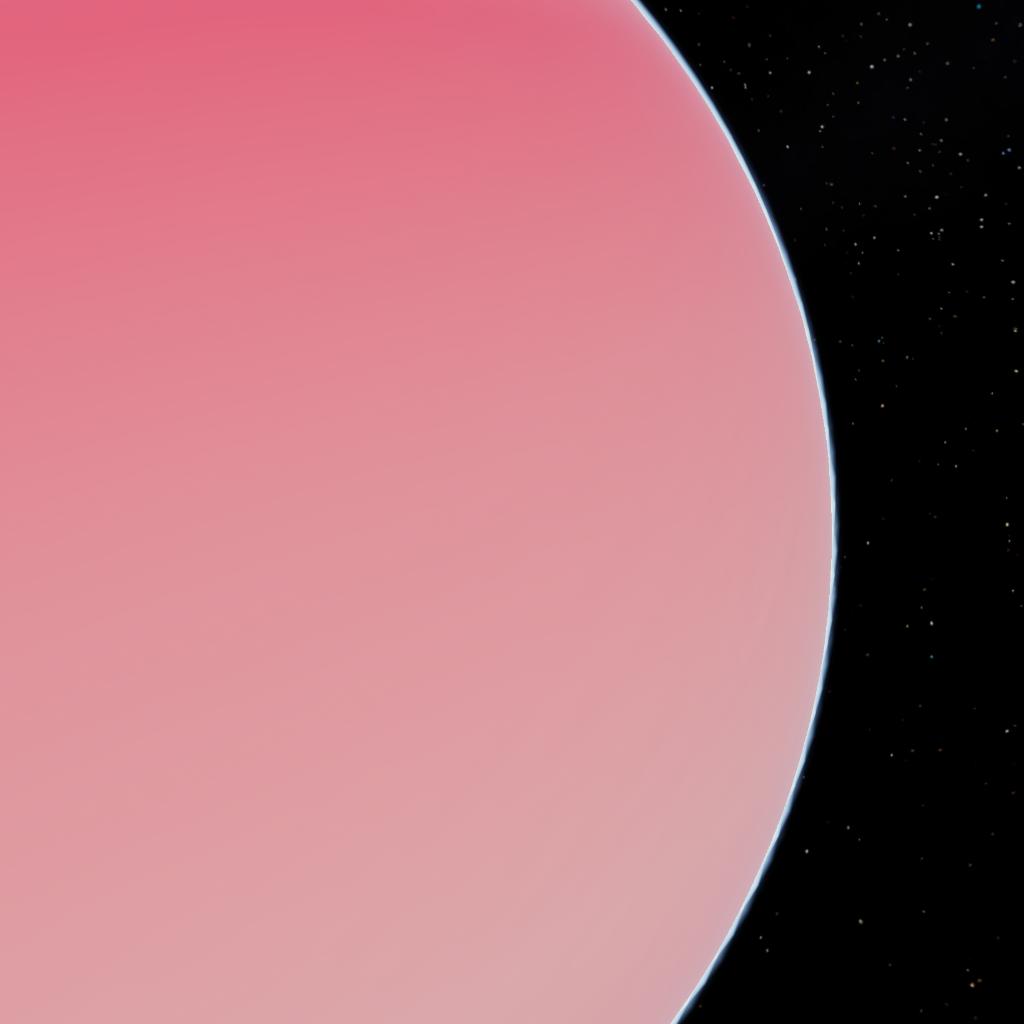
The 2nd New Planet, Closer Then Jip.
GENERAL INFO
- Created On: iOS
- Game Version: 1.3.205.0
CHARACTERISTICS
- Radius: 5,112 km
- Sea Level: None
- Surface Gravity: 9.0 m/s
- Rotational Period: N/A
- Escape Velocity: 9.59 km/s
- Mass: 3.52E+24kg
Atmosphere
- Height: 399 km
- Scale Height: 58 km
- Surface Air Density: 0.160 kg/m3
- Surface Temperature: 1,000 K
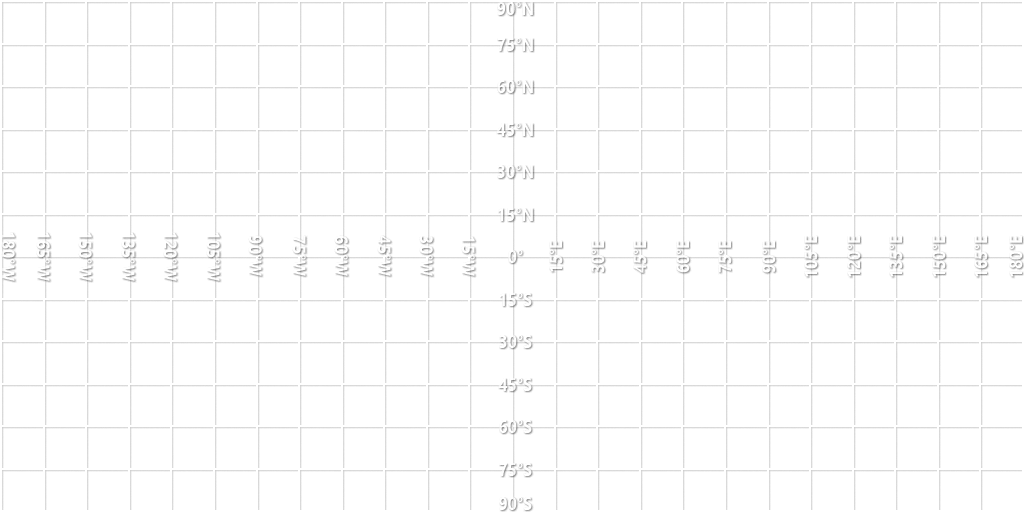
EQUIRECTANGULAR MAP
1 Comment
1 Upvote
Log in in to upvote this post.
Alright, you are getting the hang of noise, very good, now the 2nd thing you may need to focus on is Photography, which can be done by any of these methods.
Method 1 (easiest, I reccomend this): first make a structure and name it anything, one that's done, tap on the grey button with a circle in it next to the location button (blue, located left of the add structure button) congrats, you are now able to get some good angles of your planet, zoom out, zoom in, take some great pics quickly and off it goes!.
Method 2 (Hard and time consuming, yet the results don't dissapoint): now, first make a location in space, or many locations in space, for this method you either have to have the system constructed or you may have to construct it, if your celestial body is rocky and yet to have moons, make 1 or 2 moons first and add them into the system, if it's a jovian, just use this method on the moons, now, with the locations made, make a new game and use your system, now grab a good spacecraft, get into orbit, and snap some pics, this enables you to take pics of celestial bodies in their natural habitat, with their moons, moonmoons, parent, parents parent, native star and possibly neighboring worlds too! Hence ut is quite great, yet again, I warn, this takes a lot of time. If you want to see examples of this method (this isnt a self promotion yet I am the only person ik to do this) you can take a look at my worlds and see if you like them.
Nonetheless, great work here, live long and prosper man!